I am starting a new series of posts in my Poland Blog, a series on my family’s history. This is the first post in that series, about the wedding of my maternal Grandparents, Joe and Bernice (Symbal) Szczech. Pictures are worth 1000 words, and so here is the story told in pictures:
The wedding party photo
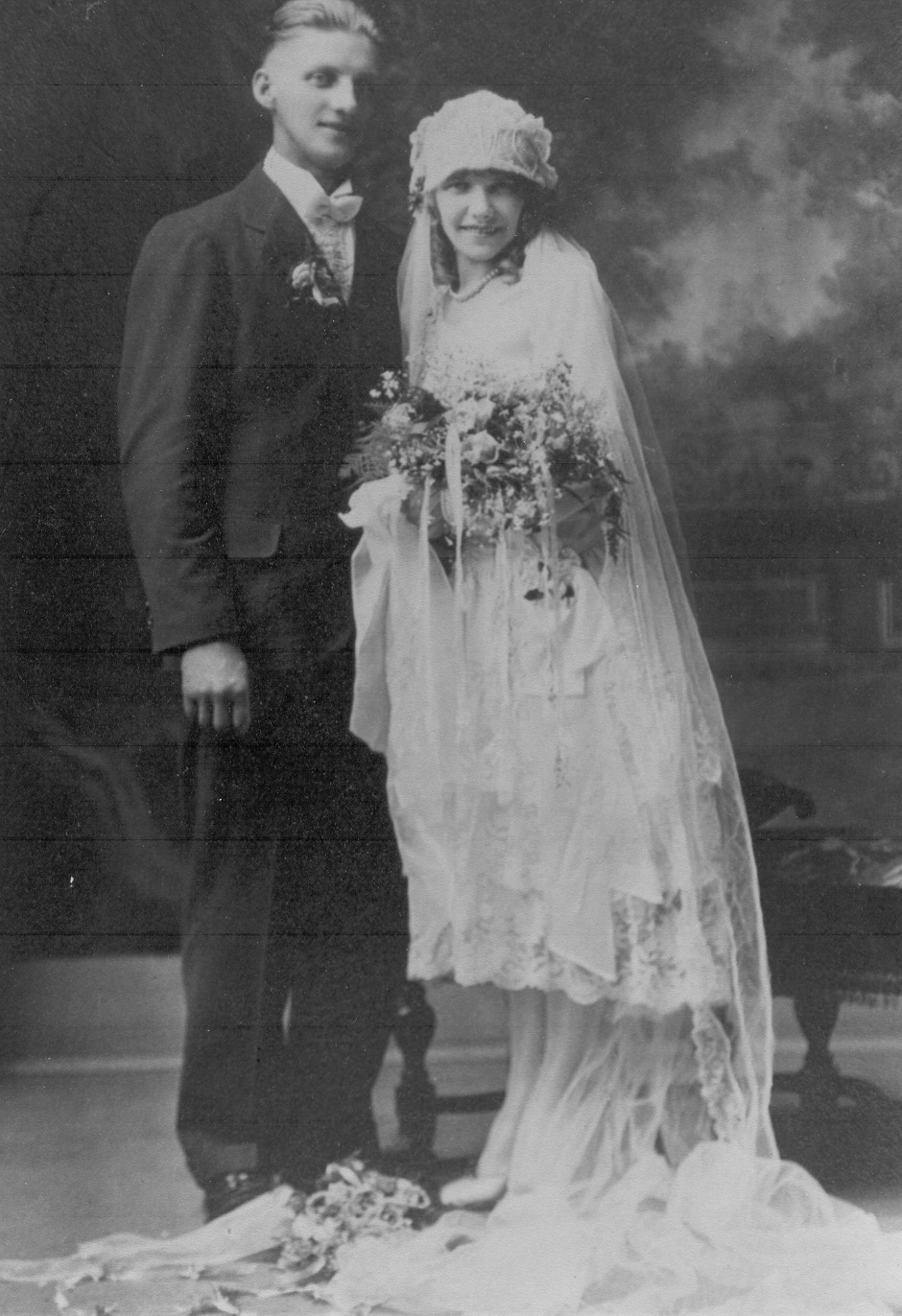
At the center, seated, are the groom and bride, Joseph Szczęch* and Bernice Symbal on their wedding day, June 11, 1929. I know all the attendants, but am not sure who is who in the photos.
The Bride’s attendants were: Anna Szczech (sister of the groom), Helen Gutowski (cousin of the bride) Victoria Symbal (sister of the bride), Rose Symbal (cousin of the bride), Bernice Szczech (sister of the groom).
The groom’s attendants were Stanley Warda (brother-in-law of the groom), Charles Gutowski (brother-in-law of the groom), Stanley Kot (family friend), Florian Brzuzan (family friend) and Harry Meske (family friend).
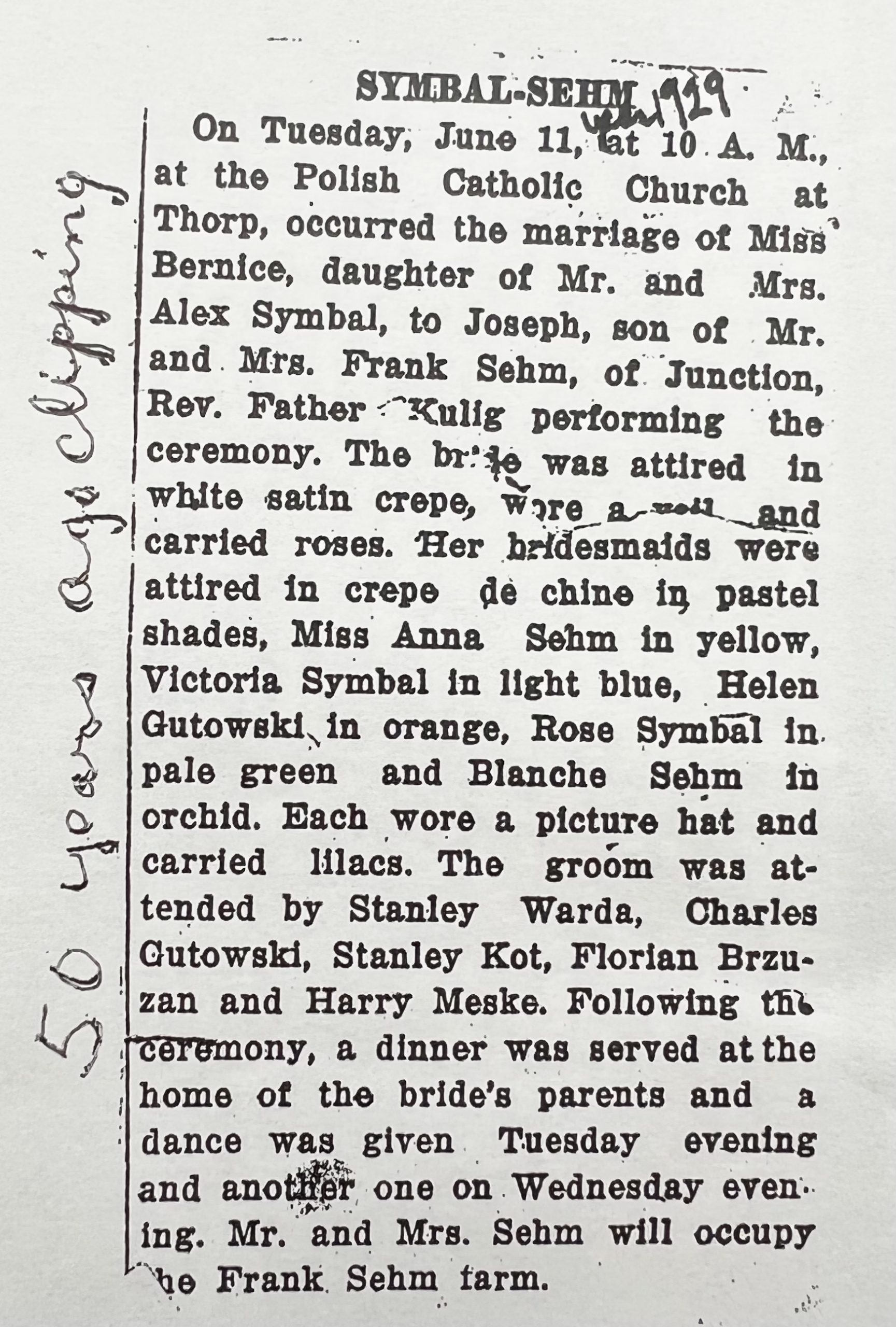
Here is a copy of the original newspaper clipping about their wedding:
Junle 11, 1929
*The interesting thing to note here is the groom’s surname. In proper, original Polish, it was Szczęch. But like so many Poles, the family struggled to adapt to America and it’s culture, and Polish names were for Americans often difficult to pronounce. At one point in time, the used the surname Sehm, and that is what was used in this marriage notice.
At some point later, the family decided to standardize the surname and used Szczech (converting the ę to e). But even years later, others struggled with the issue. Joseph Szczech’s brother, who was drafted into World War II, used Sczeck as his surname and that’s what’s on his military records and his military tombstone/plaque–he was KIA in 1944 in France, fighting in the US Army. But the original, historic surname was Szczęch, and the ancestors were from the south of Poland, from the villages of Krauszów and Ludźmierz. But that’s a story for another time.
If you’d like to know more about my ancestors, visit my family tree which is online here.
Lastly, here is a photo of the bride and groom, my maternal Grandparents:
Most western schools don’t mention the significance of 15 August 1920, but an event happened that day that is significant in the history of the west and for Europe–the Battle of Warsaw.
Following Poland’s re-emergence as a nation in 1918 after 123 years of partition, the Soviet Union was intent on spreading the Bolshevik revolution to western Europe. Germany was particularly ripe for this, suffering greatly from the after-effects of World War I. But one country stood in the Red Army’s way, Poland.
Having pushed through a great swath of Poland, by August 12, the Red Army was at the gates of Warsaw. Far superior in number and armament, the final push for Warsaw began and the battle raged for three days. Finally, on August 15th, the Poles prevailed and held their ground. But this was not the end of the Battle, nor of the famed “Miracle on the Vistual.” Poised to the south, Poland’s Marshall Józef Piłsudski himself had command of Polish troops, poised to cut the back door and supply lines of the Red Army.
Starting on August 16, the Polish Army advanced on the rear of the unsuspecting Red Army, and over the next 10 days succeeded in totally defeating and routing the far superior Red Army. It was a total victory for Poland.
Why is this battle one of the most important battles ever fought in Europe? Because it stopped the Red Army, intent on fomenting communist revolution in the rest of Europe. The Soviet Union had to settle for peace, and uneasy peace that lasted nearly 20 years.
Why did the Poles win against such a superior force? Having not had a country for 123 years, the Poles has fierce nationalism on their side. The Red Army was full of conscripts who had no “skin in the game,” and was handicapped by politics–Soviet Commissars had the last say in military matters, not the military. Also, the Poles had for several years broken the codes used by the Red Army, and knew all their plans in advance. The victory for Poland was total and complete, and set Poland’s eastern border until the outbreak of World War II.
But Stalin had his final revenge. After the Soviets split Poland with Germany in 1939, the Soviets imprisoned many, many military officers, many veterans of the 192o war, and then executed them, well over 20,000 officers and other intelligentsia, in what is today known as the Katyń Massacre–killed by a bullet to the back of the head, and buried in mass graves in the Katyń forest (and other locations). Stalin had his revenge. But, nearly 5o years later, Poland took the lead in bringing about the downfall of Communism, and today is a free country, the envy of many nations.
The Battle of Warsaw, a great Polish victory, celebrated today, 15 August, for the events that happened 100 years ago, saving Europe from Communism. A page in history that few in the west know about and appreciate. But now you know the rest of the story.
I’ve always known that I was Polish, even though I was born in the USA. How’d I know? I guess because my all of immigrant ancestors came to the United States between 1884 and 1907 and brought with them the profound knowledge of who the were and where they came from. To be fair, not all were 100% Polish–heck, Poland as a nation did not exist when they came to the USA. But they all knew who they were and brought their customs, language, and culture to the USA with them, and did not forget who they were or where they came from. It’s part of the Polish spirit, and has a lot to do with how Poland has survived all these thousand or more years.
But this post is about my favorite city in Poland, Kraków. Why Kraków? Because I think the heart of what “Poland” means lives and starts in Kraków. Poland’s history is complex, and Kraków was the capital of Poland from about the 11th century until the end of 16th Century. It is home to the marvelous Wawel Palace and cathedrals. It’s old town is a UNESCO World Heritage Site, one of the first places so honored. And, Kraków, for the most part, escaped the near total destruction that was the fate of so many other cities in Poland jduring World War II. This, among many other reasons, is why I love Kraków.
I’m fortunate, I visited Kraków twice–the first time was on an organized tour in 2010 where we took in a few of the main sites. The second time was in September 2019, where we visited on our own and so we chose where to go and what to see. If I was told that there was only one city in the whole world I could visit, it would be Kraków.
I am writing this post in part because my nephew, Joe, contacted me. His son, Mac, is doing a project for school, writing about a city, and he chose Kraków. He knows he’s Polish. The fruit does not fall far from the tree, does it? And so in this post, I will tell a few stories of Kraków, along with some photos, from both of my visits there.
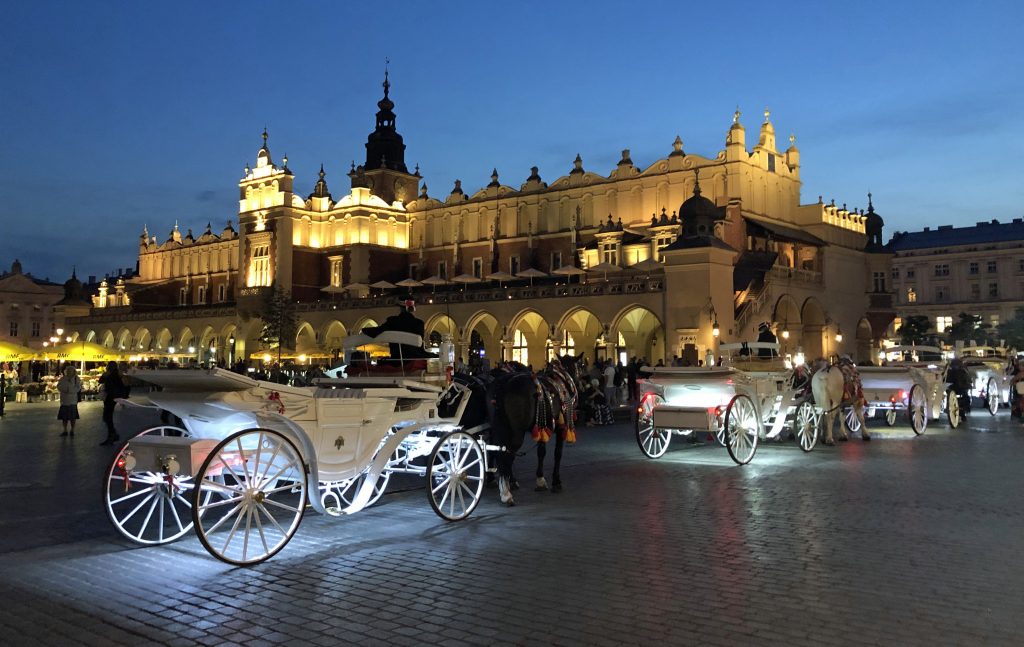
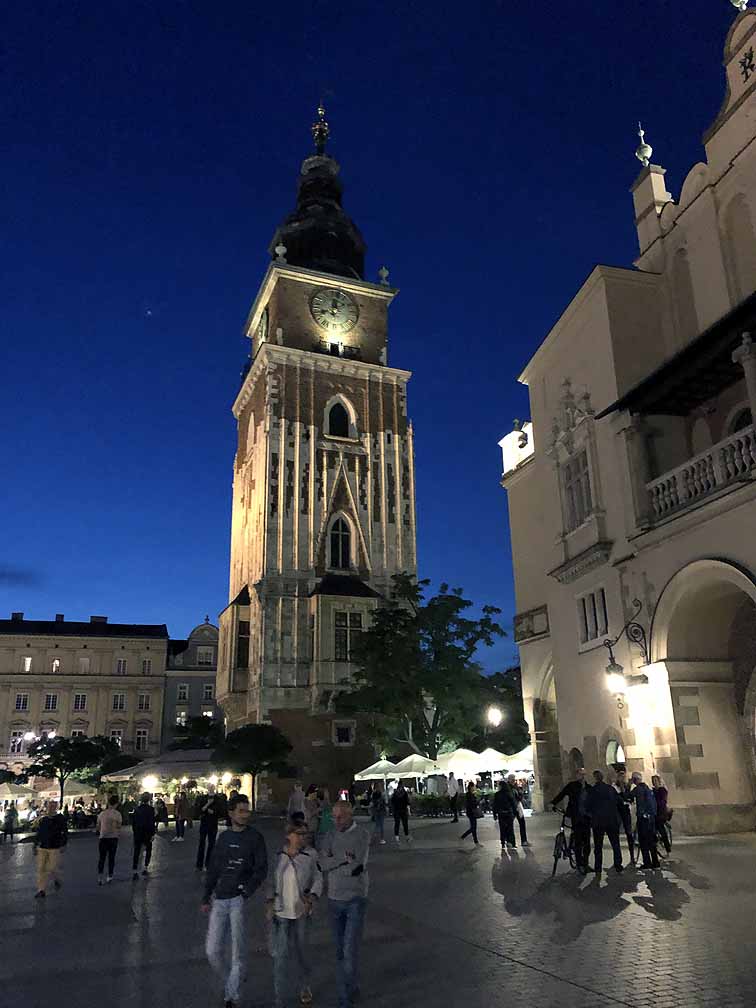
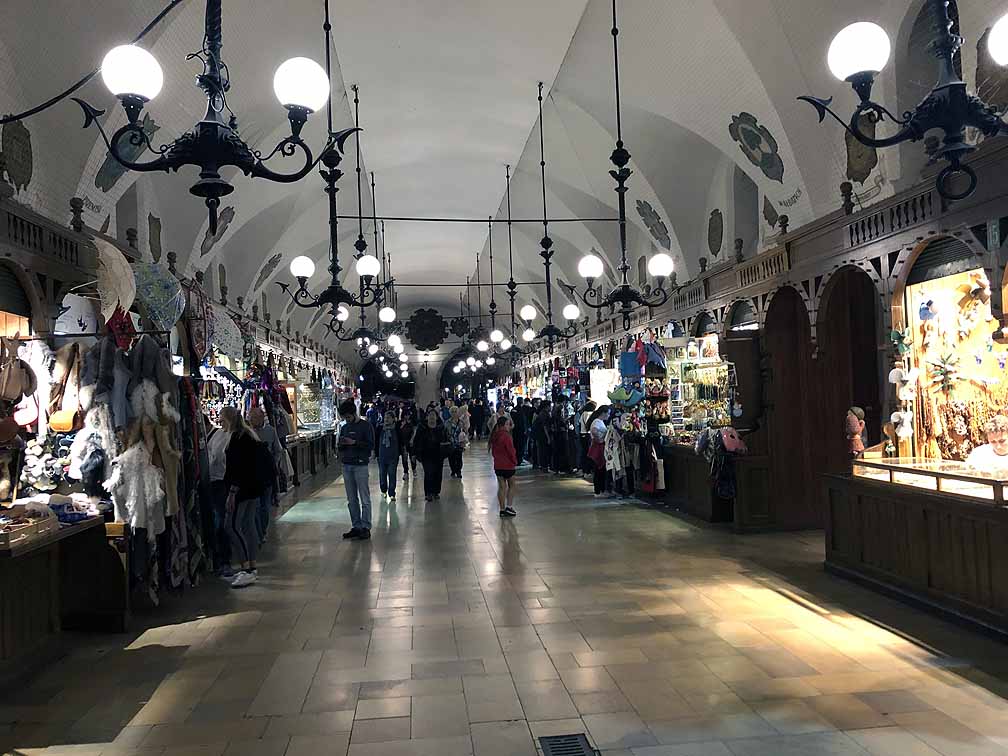
The Cloth Hall (Sukiennice) on the Town Square in Old Town
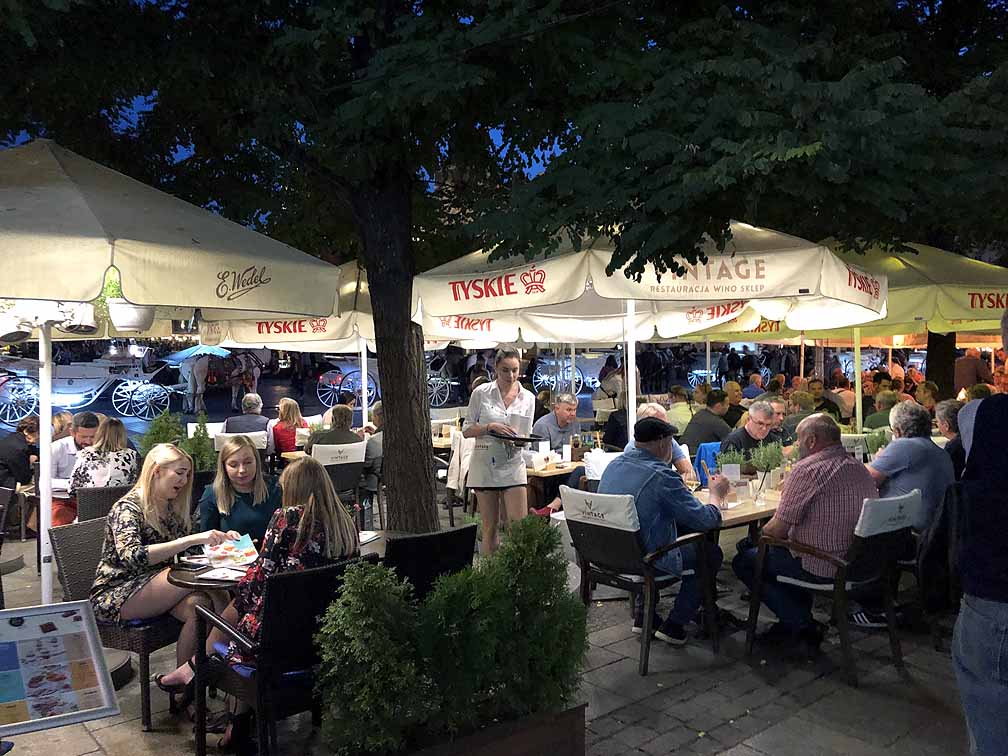
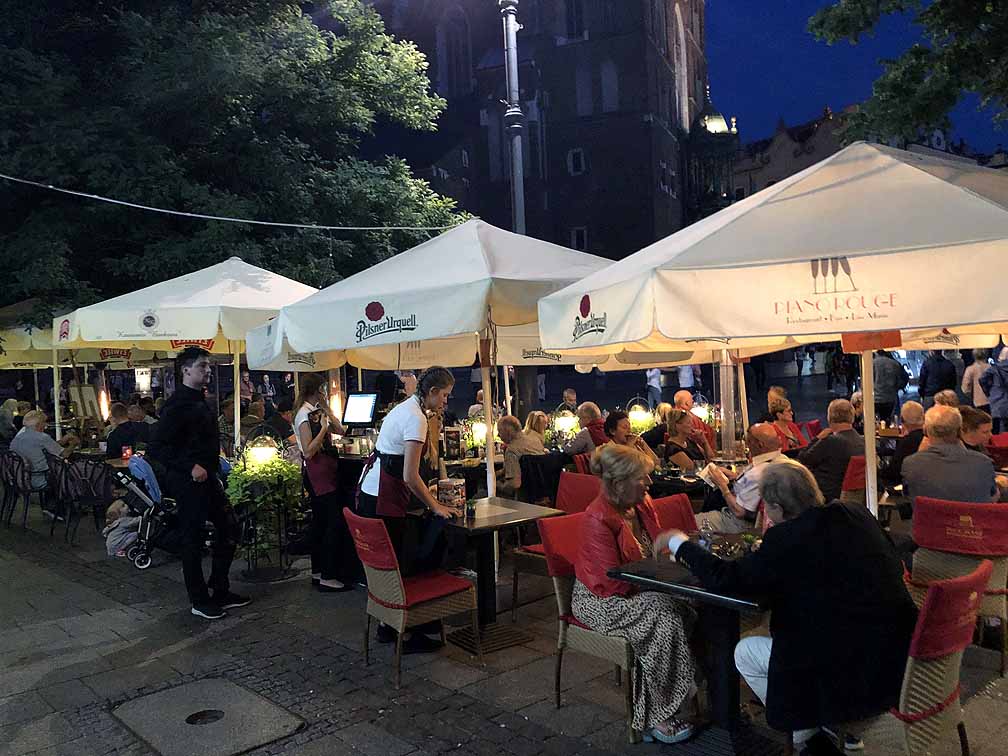
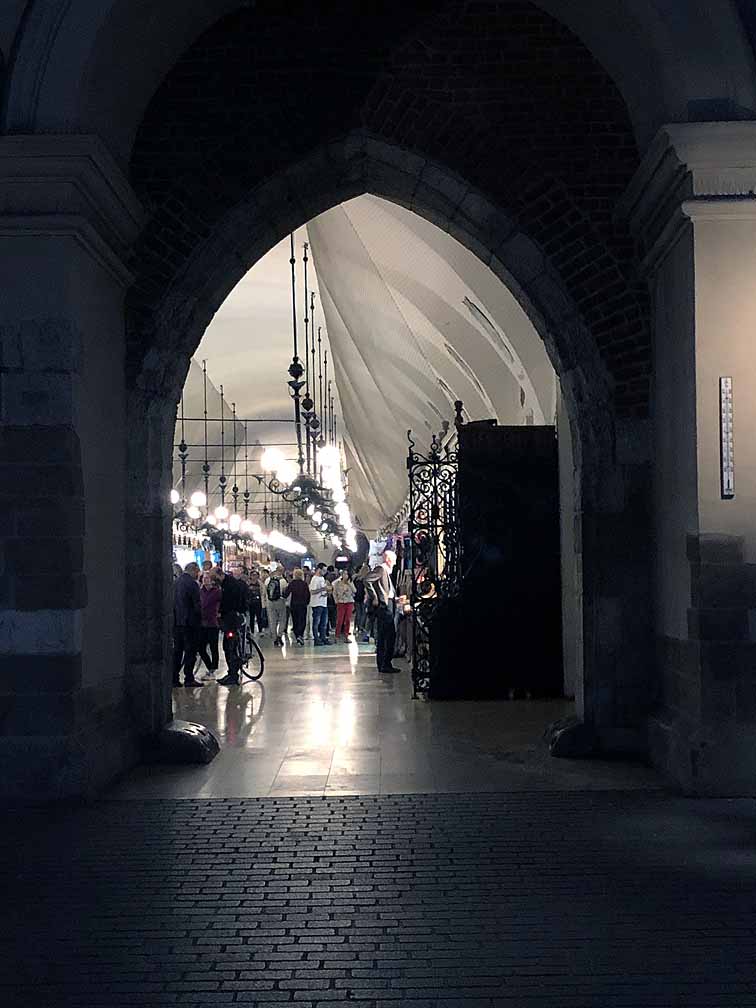
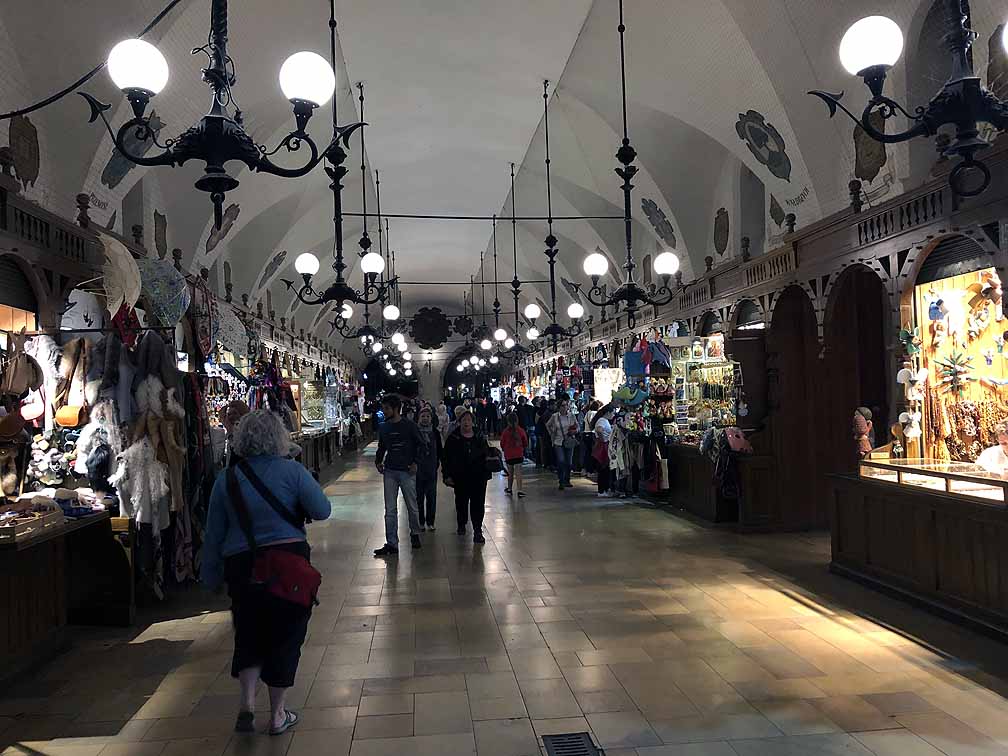
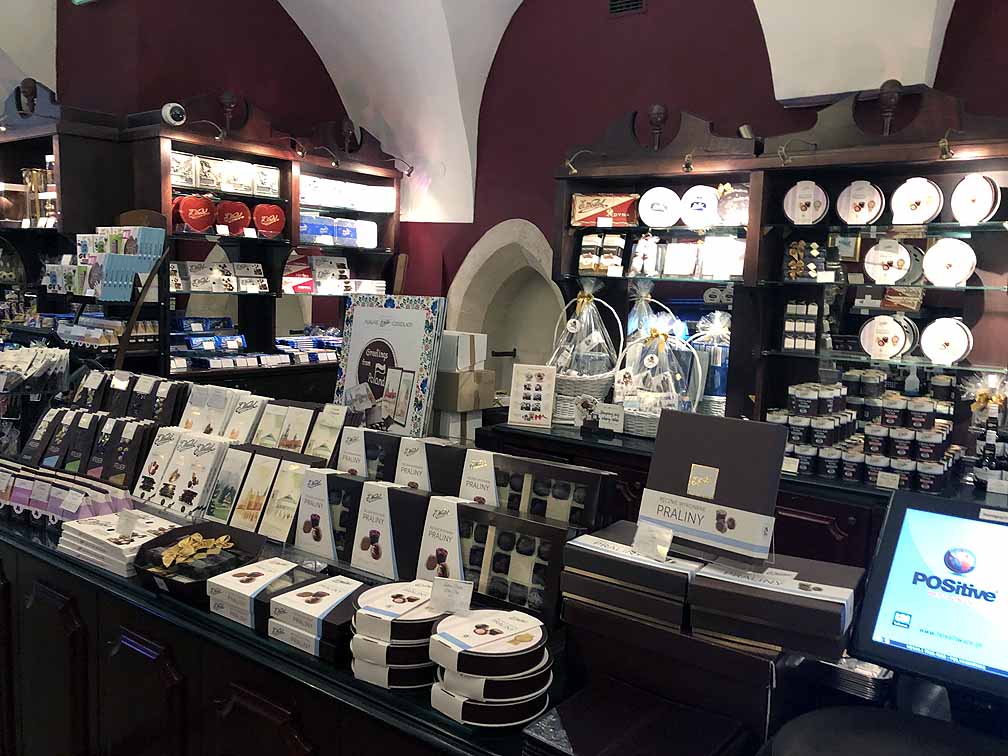
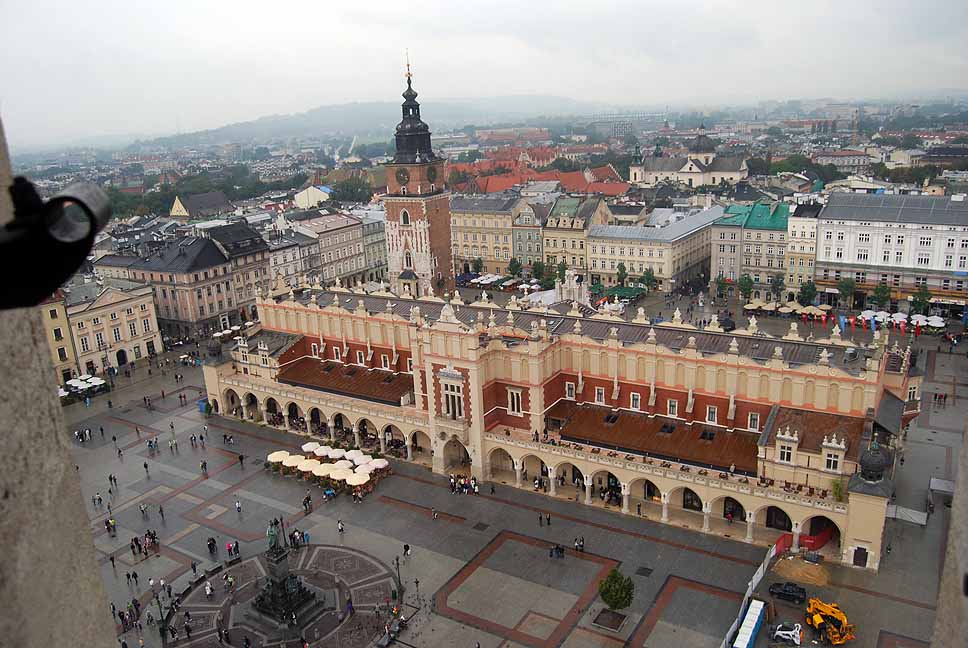
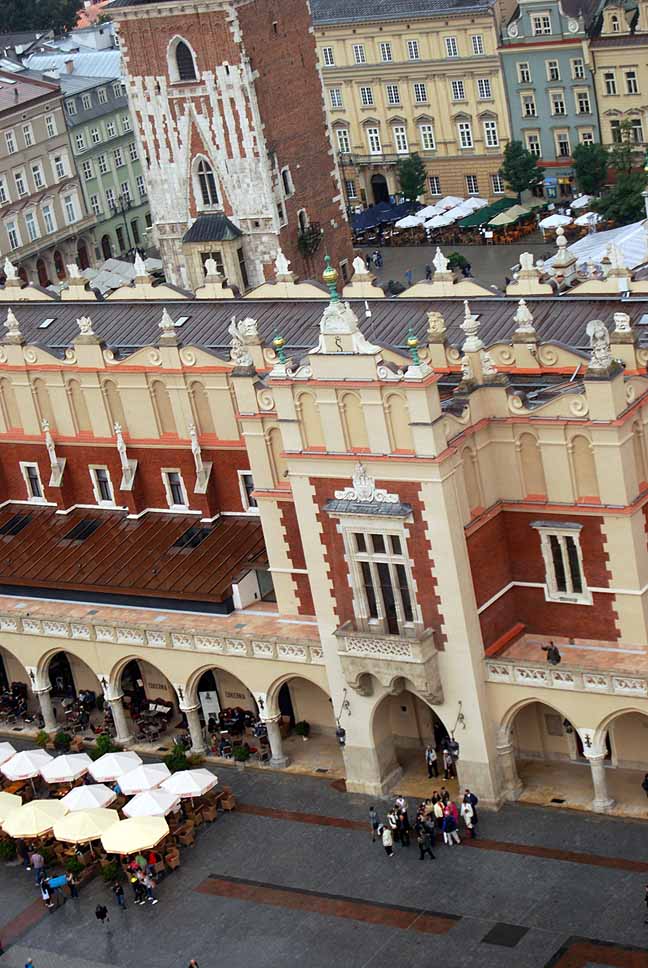
The Old Town Square in Kraków is one of the most enchanting places I’ve ever visited. This view in the evening, shows the old Cloth Hall (Sukiennice) in the background–years ago it was where merchants met to trade cloth and other wares. Today it houses various vendors selling souvenirs, gifts, trinkets, and mementos, as well as several restaurants. The second floor houses the Sukiennice Museum of 19th Century Art, well worth a visit. We toured the museum and were very impressed by the art collection–it is magnificent.
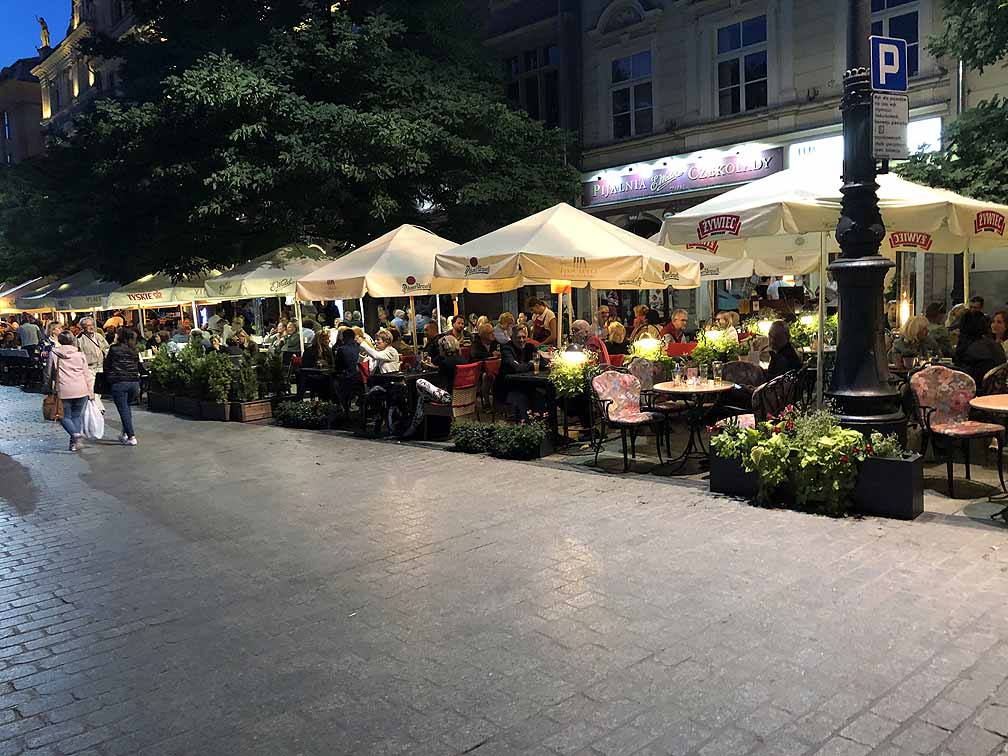
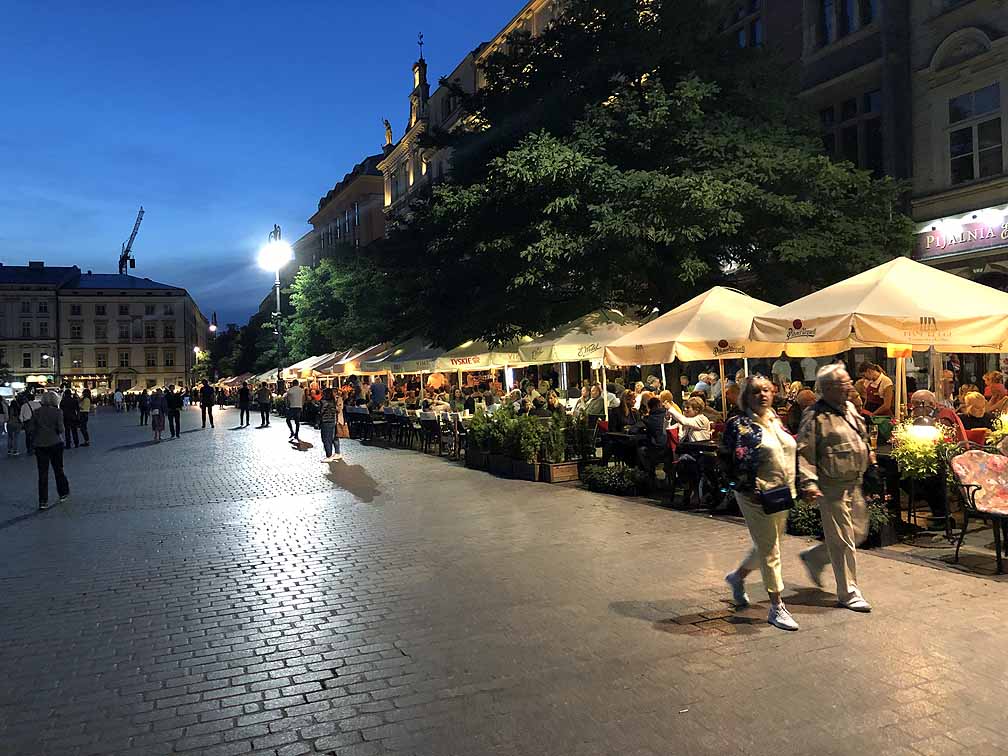
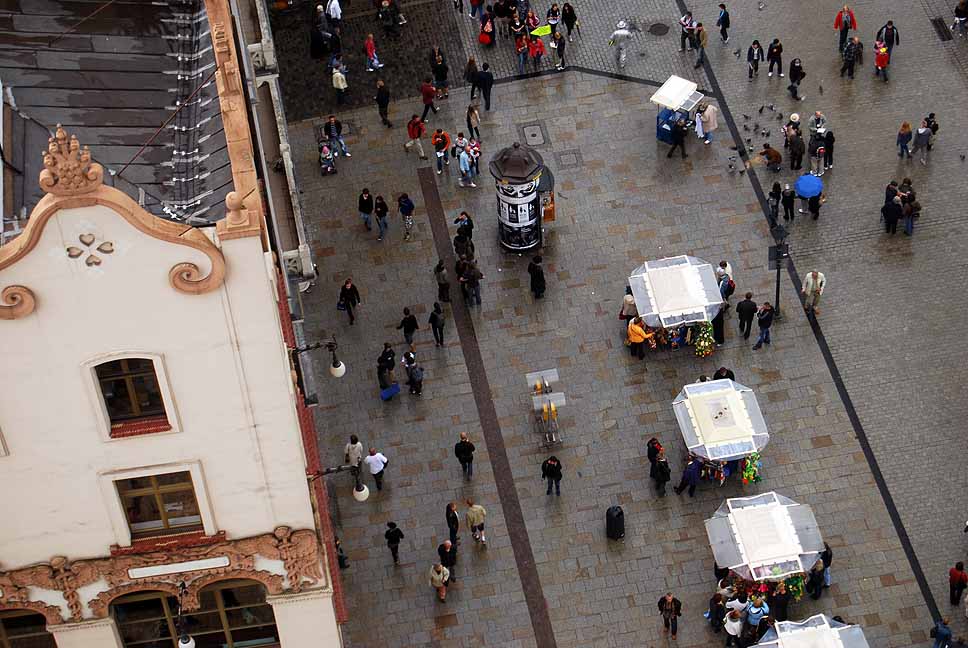
In days gone by, the town square was of vast importance, as it’s here that merchants would meet to sell, buy, and trade goods. Today the old town square is well populated with restaurants and souvenir shops. Town squares today are still the center of social life across all of Poland, and Kraków’s old town square is no exception–and, at 9.4 acres, it is the largest medieval town square in all of Europe.
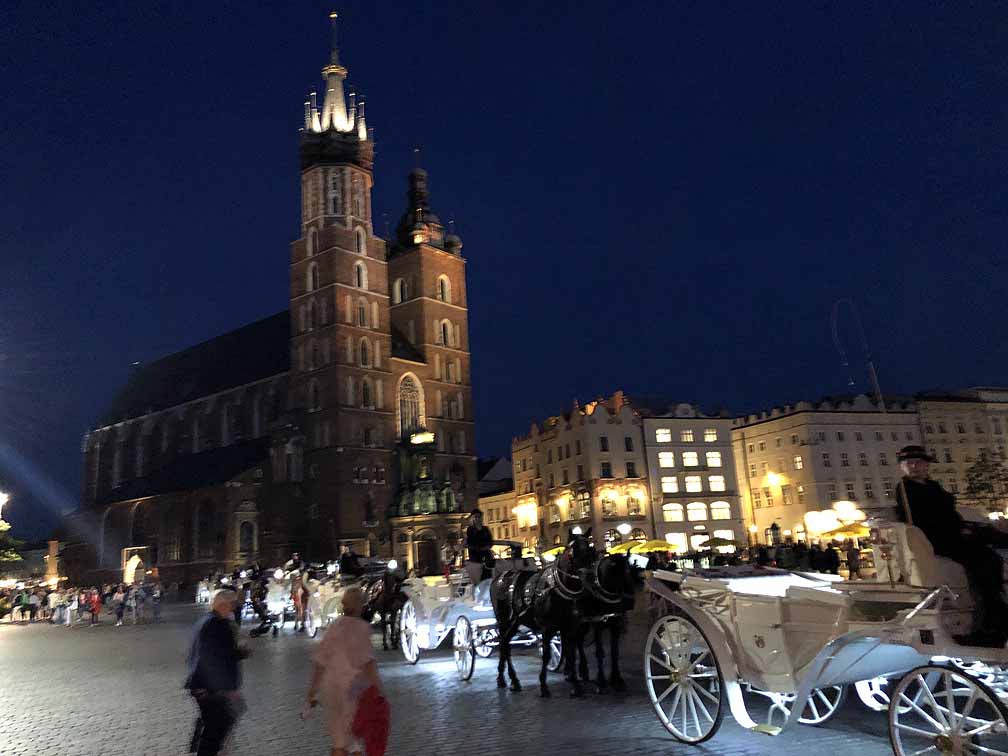
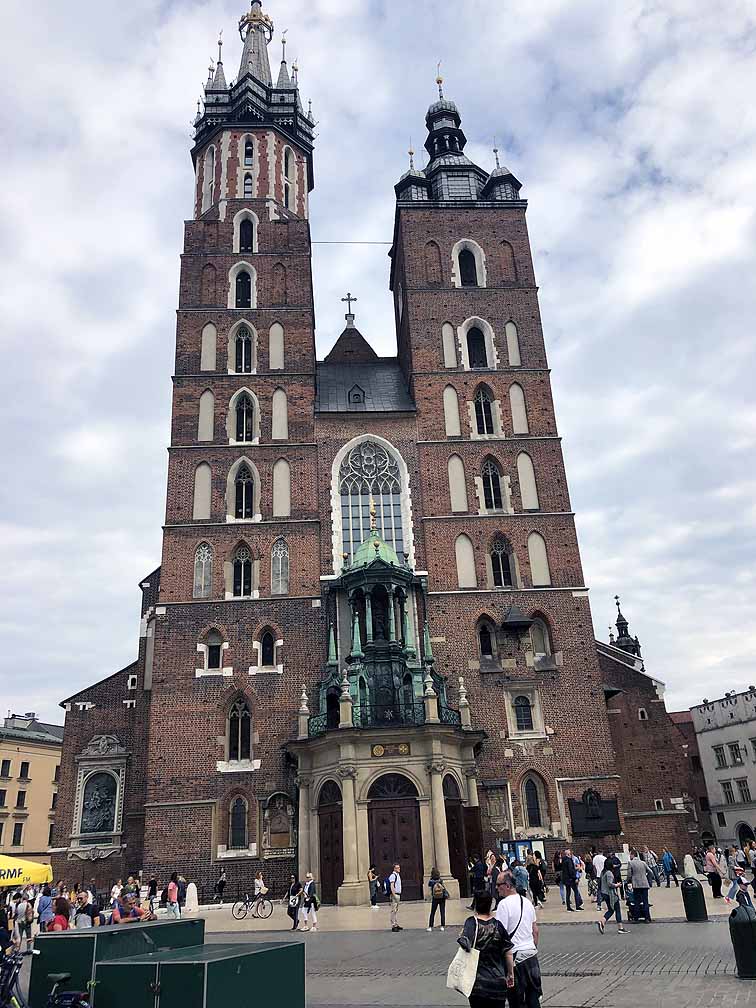
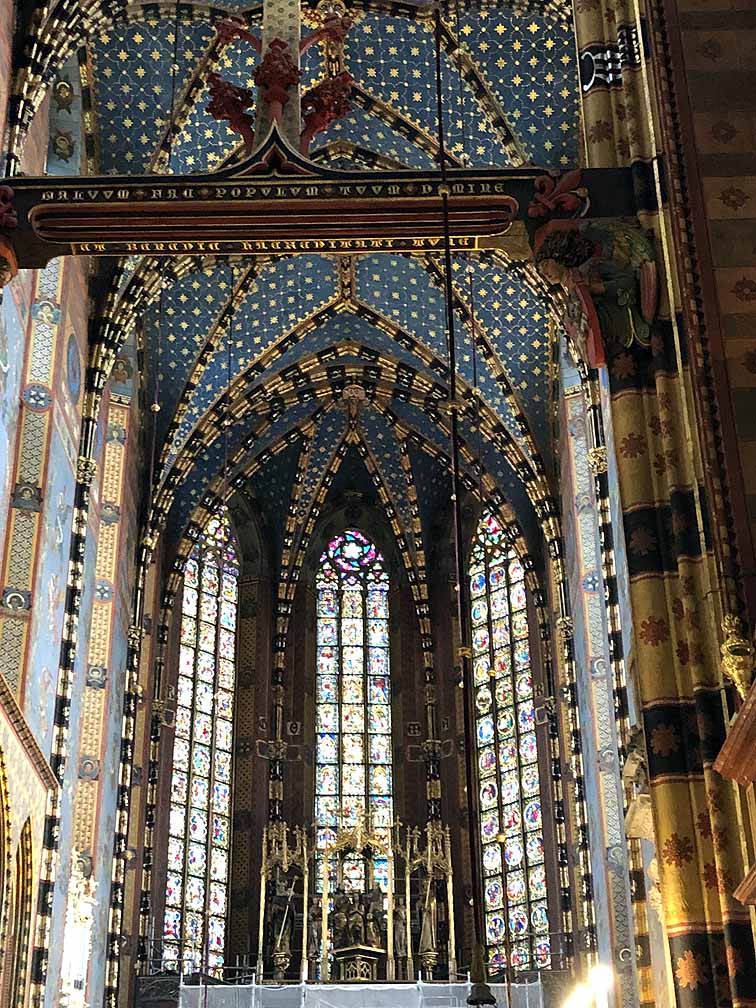
One of the most famous edifices on the Town Square is the church called Kosćioł Mariacki–St. Mary’s Basilica. It was built in the 14th century (1355-1365) on a 13th century foundation and is one of the best examples of Polish Gothic architecture. It is 80 m (262 feet) tall and is particularly famous for its wooden altarpiece carved by the German carver Veit Stoss (Wit Stwosz). St. Mary’s Basilica itself became a UNESCO World Heritage site in 1978. The altarpieces has its own story. During World War II, the Nazis hauled away many Polish treasures, and destroyed many Polish works of art. They also hauled away the Veit Stoss altarpiece. But they did not destroy the wooden altarpiece because it had been carved by a German. They did haul it away and put it in storage, but after the war it was located and returned to Poland and the church.
I have visited Kosćioł Mariacki (St. Mary’s Basilica) twice. When I was in the old town square, I heard the bugle call, the Hejnał, which has a rich history. The Hejnał (also known as St. Mary’s Trumpet Call) is a 5-note Polish anthem, played every hour, on the hour, every day of the year. It is played four times in succession, once east, north, west, and south, from the tower of the church. Each time it is played, the melody ends abruptly, unfinished. According to legend, the Mongols were approaching Kraków, and a trumpeter in the tower sounded the alarm, but was unable to finish as a Mongol arrow shot him in the throat. True story? Who knows, but it makes for a good legend.
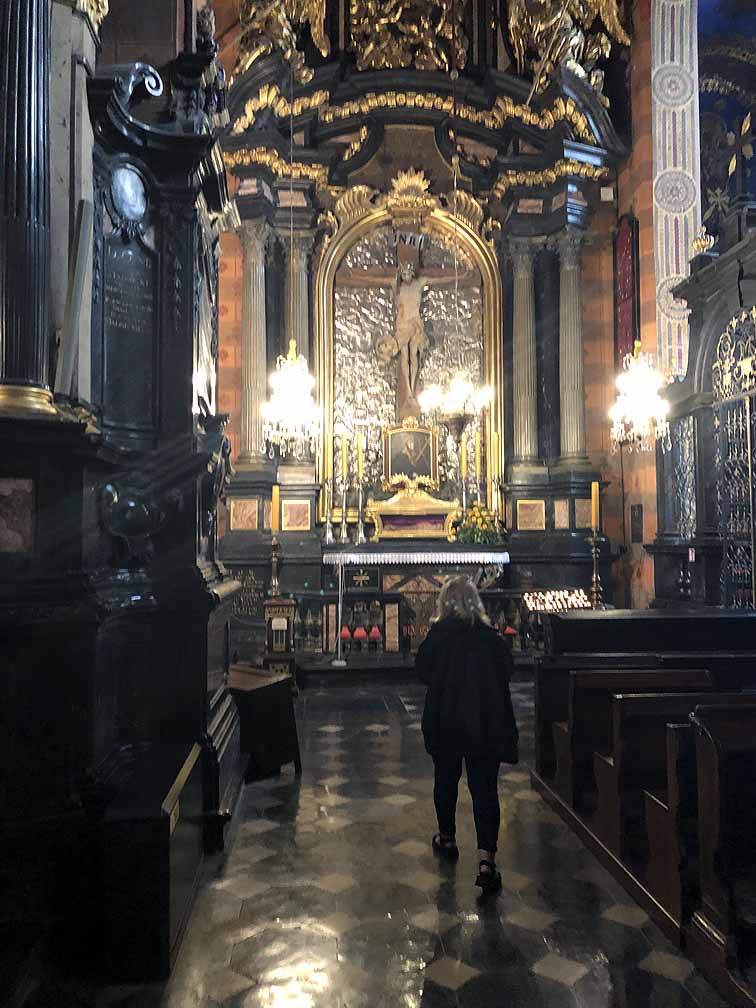
For a great series of photos from inside St. Mary’s Basilica, see this article here. That article has many great photos (as do many web sites) and a spectacular view of the Veitt Stoss altarpiece. Magnificent, but even more so to see it in person, and I have, twice, though last time it was partially hidden by some other restorations going on. As you can imagine for a church of this age, it takes a lot of work to keep it in prime condition.
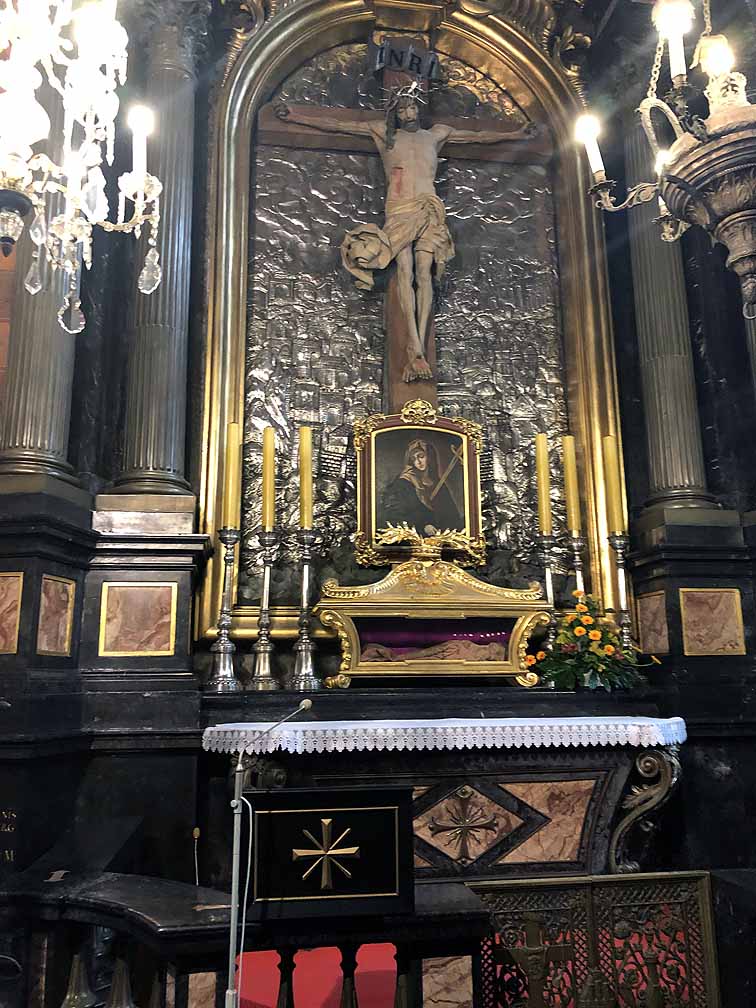
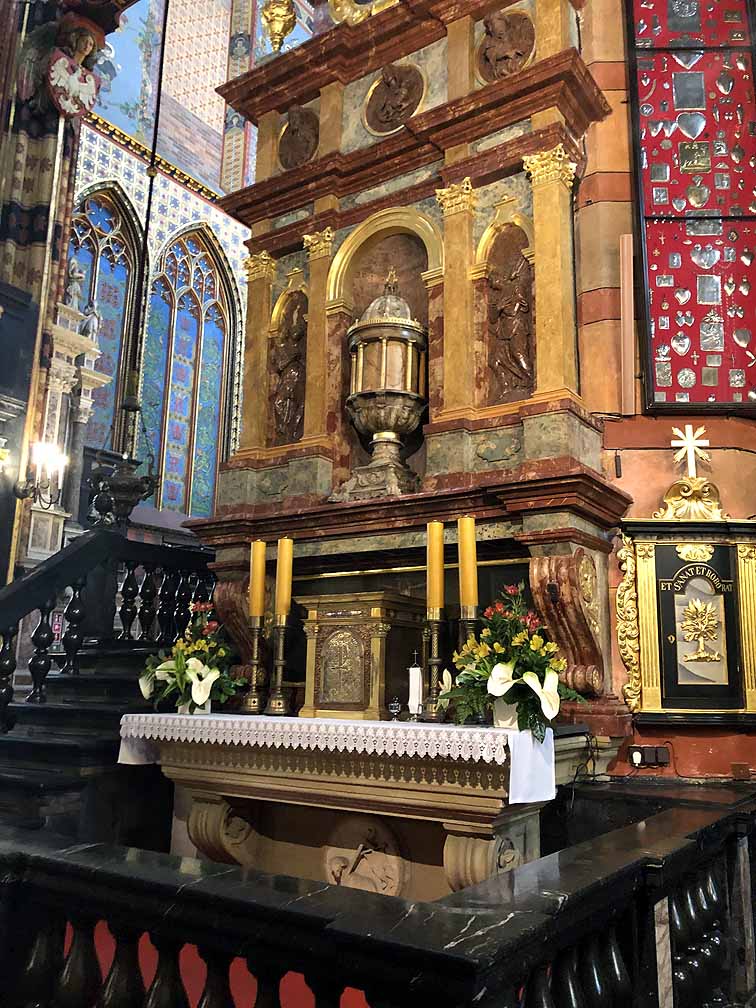
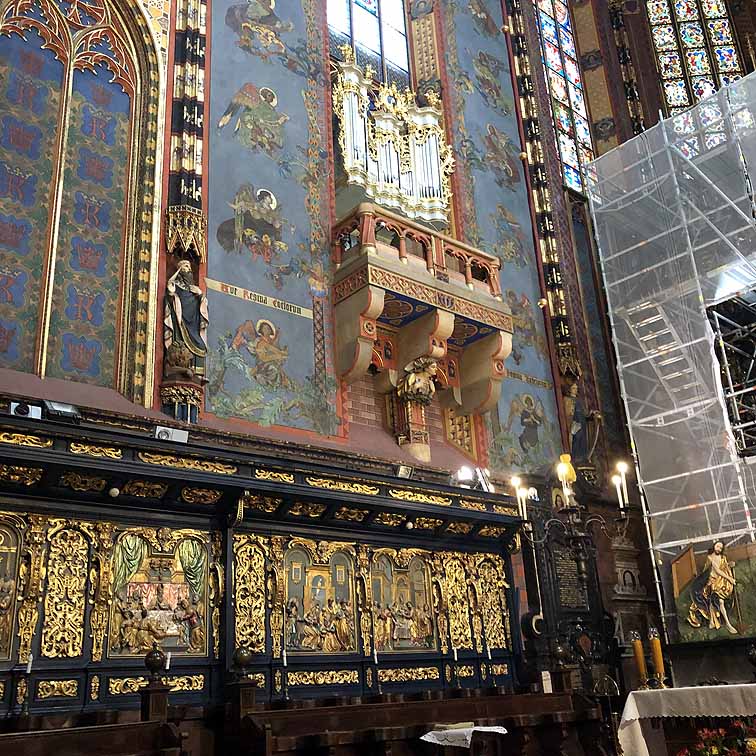
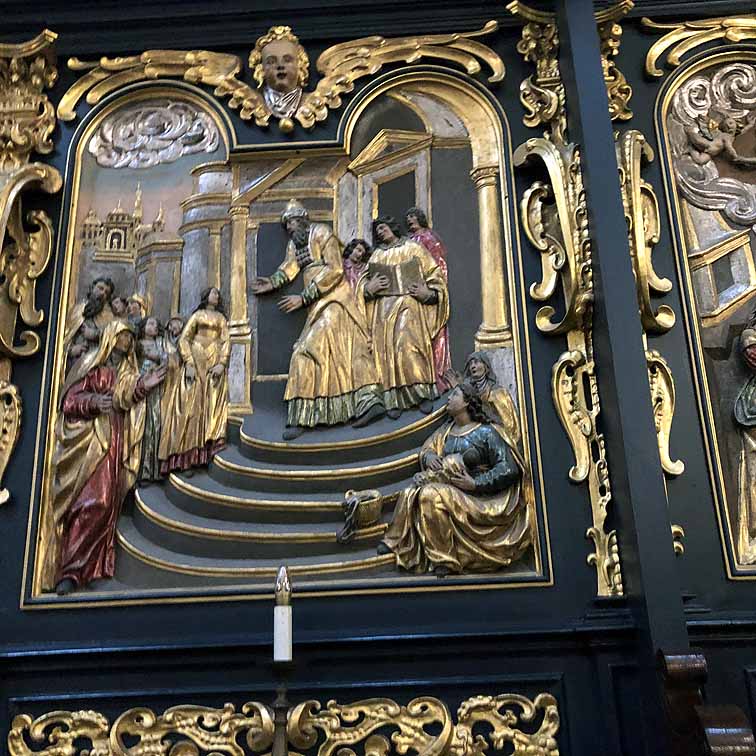
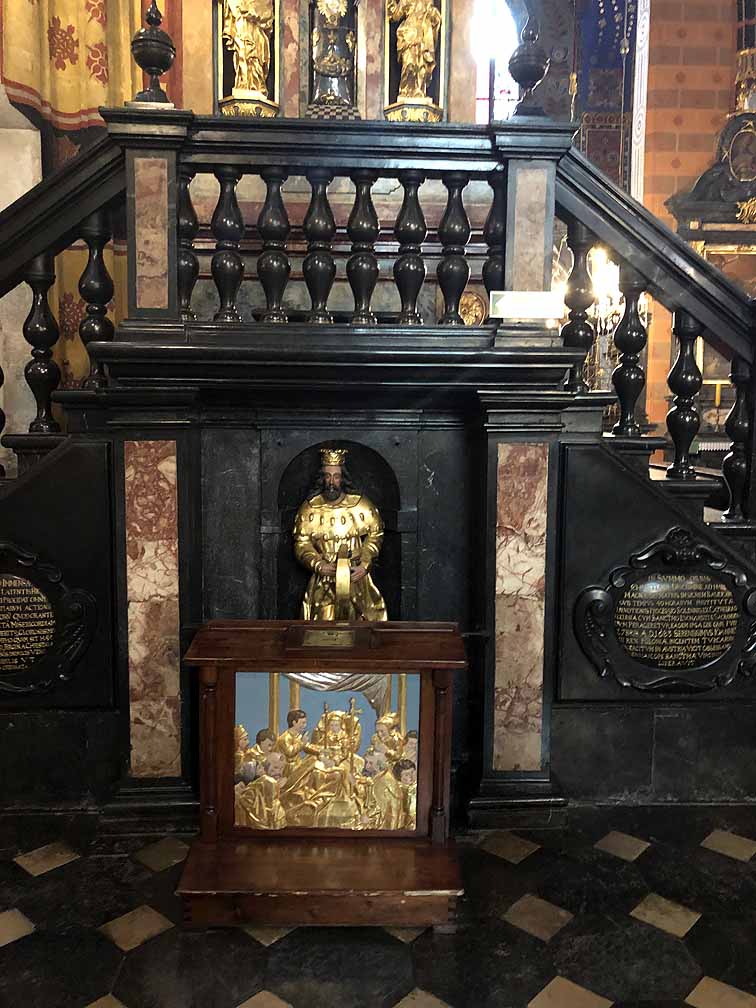
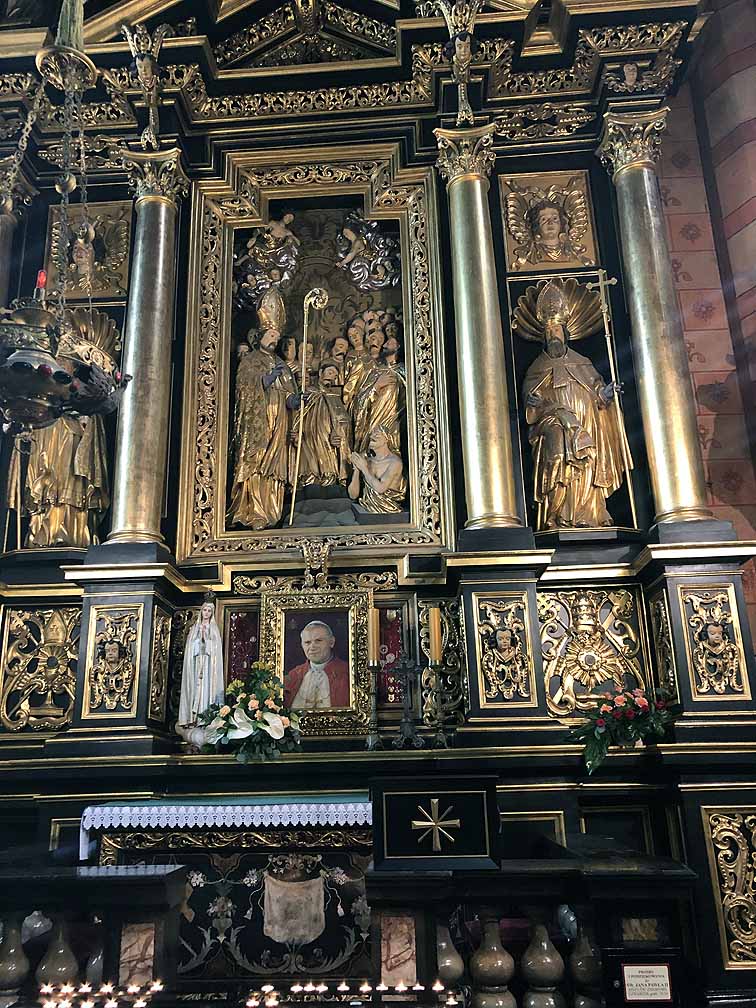
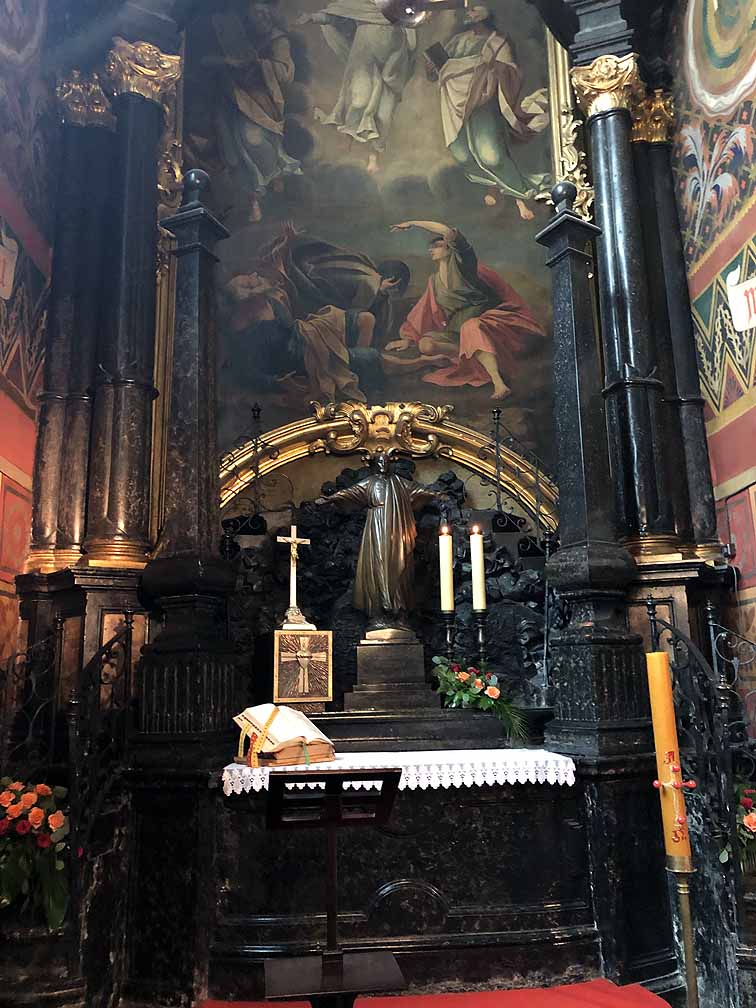
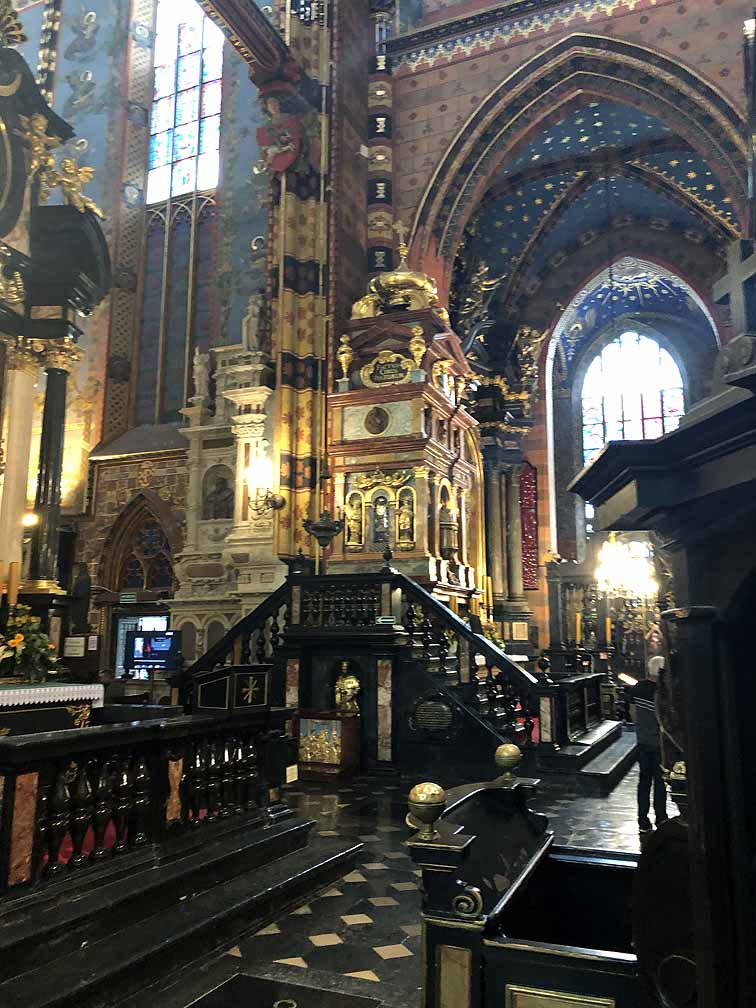
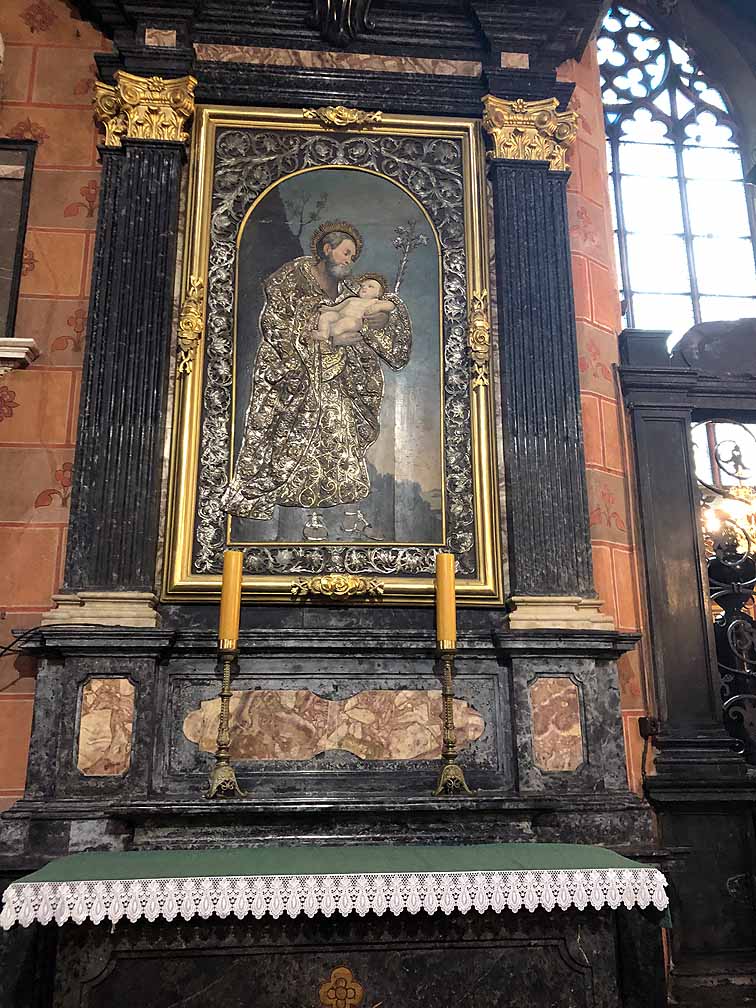
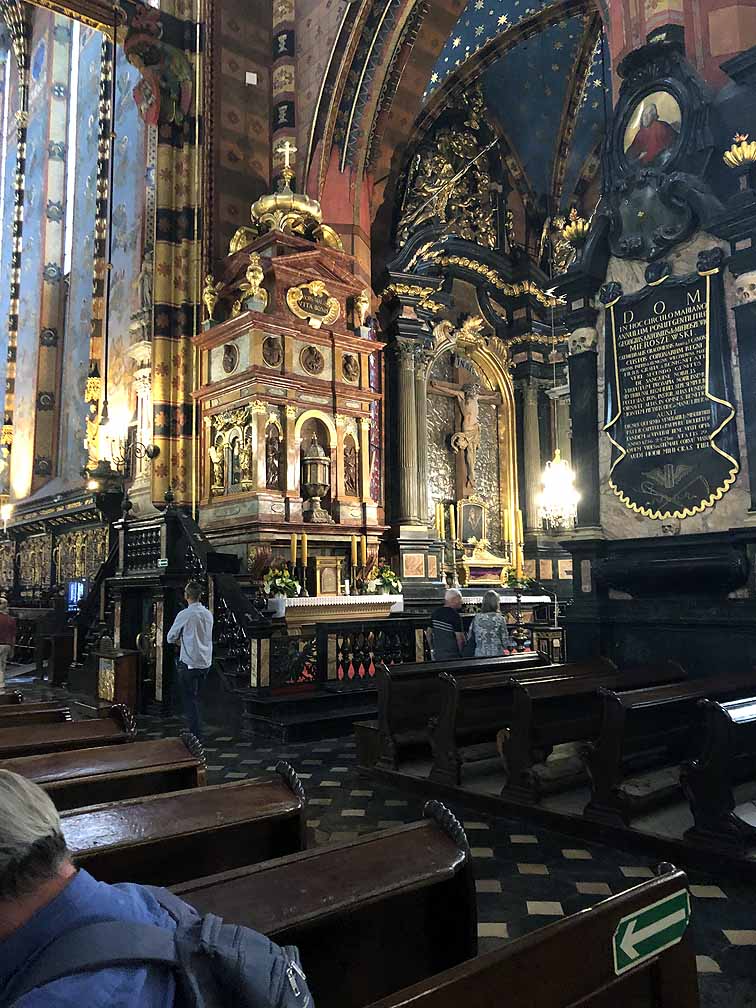
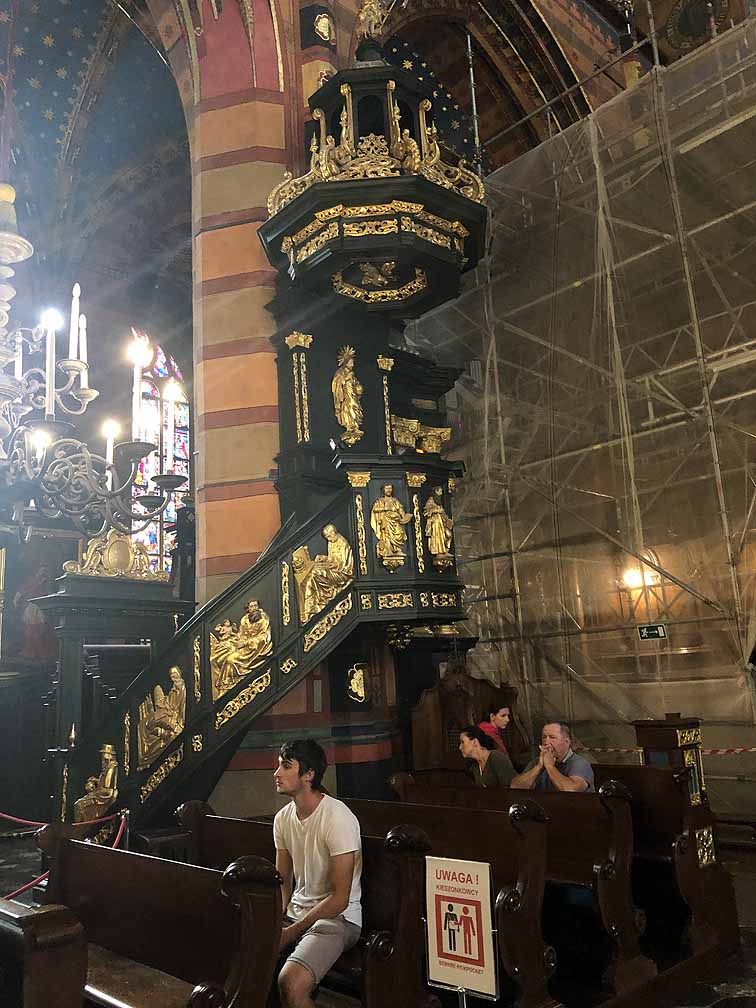
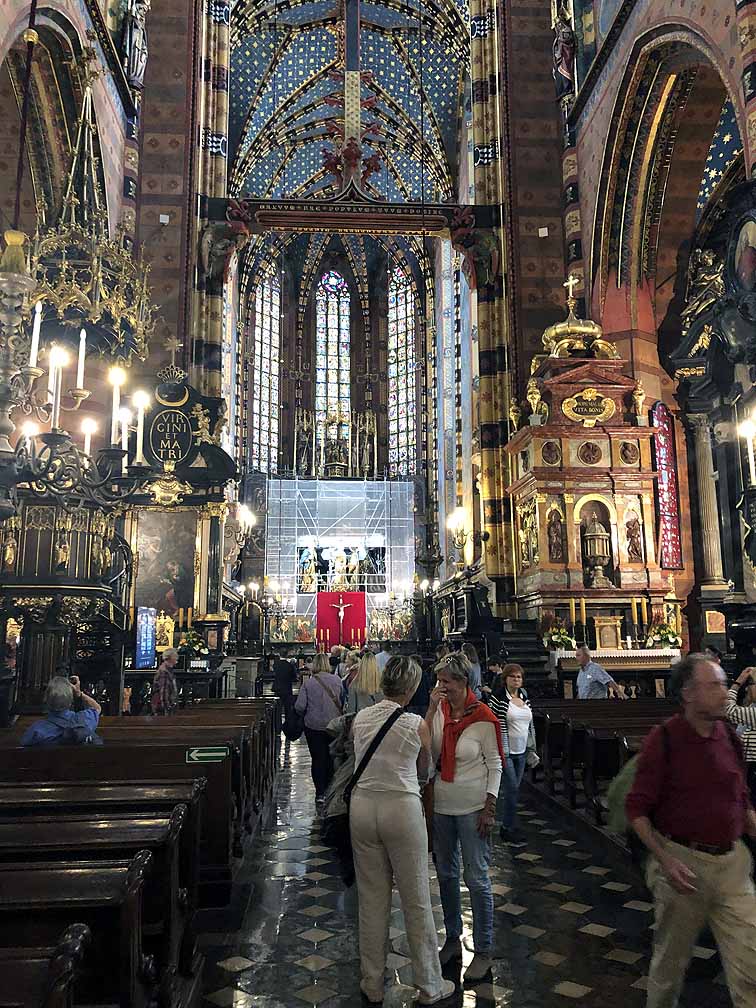
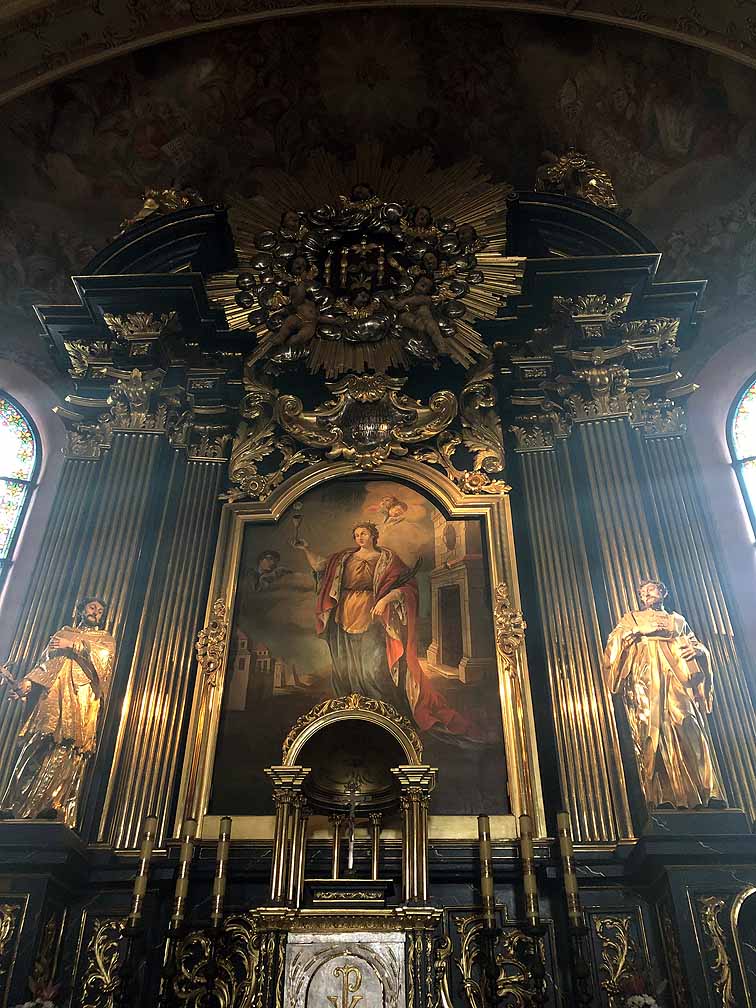
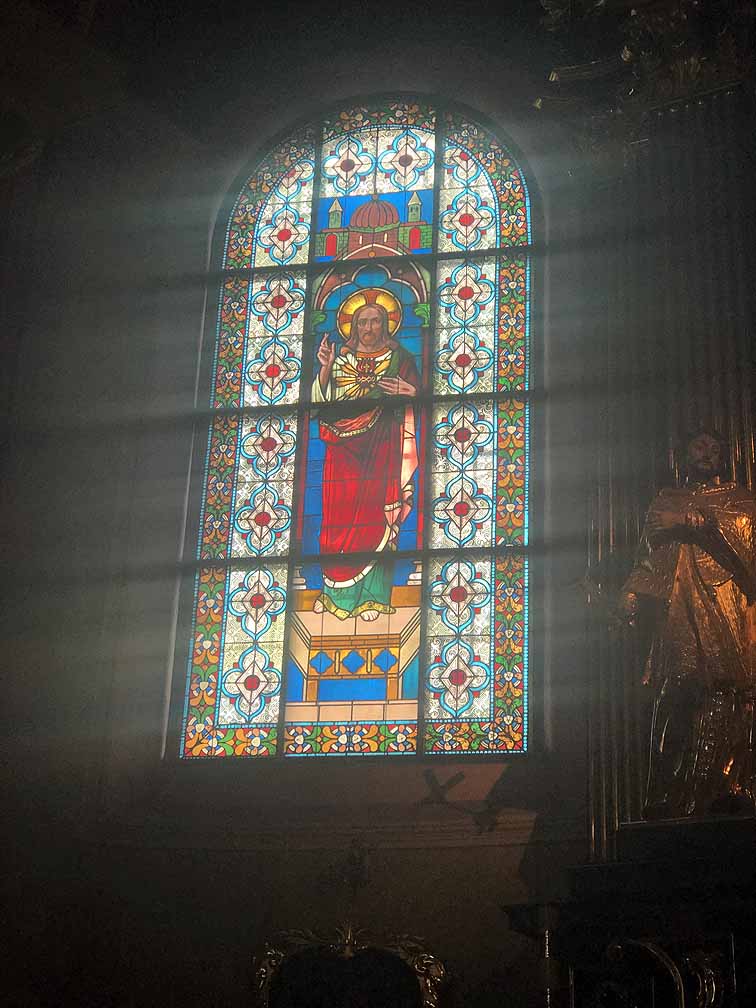
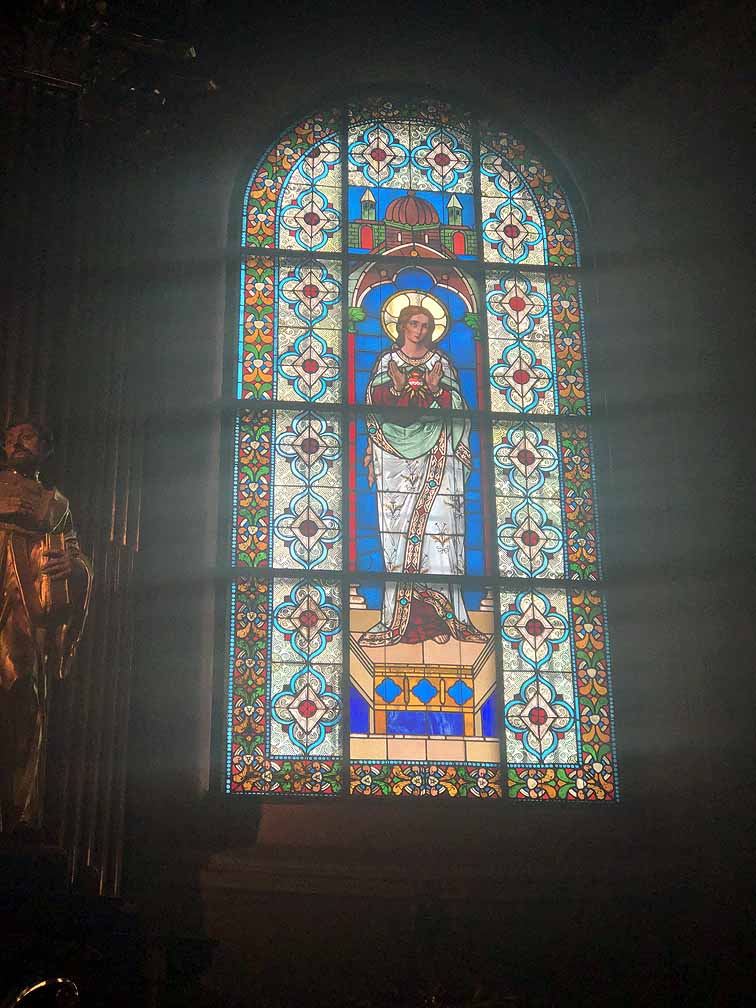
Below are some of my photos from inside this magnificent church, taken during our 2019 trip.
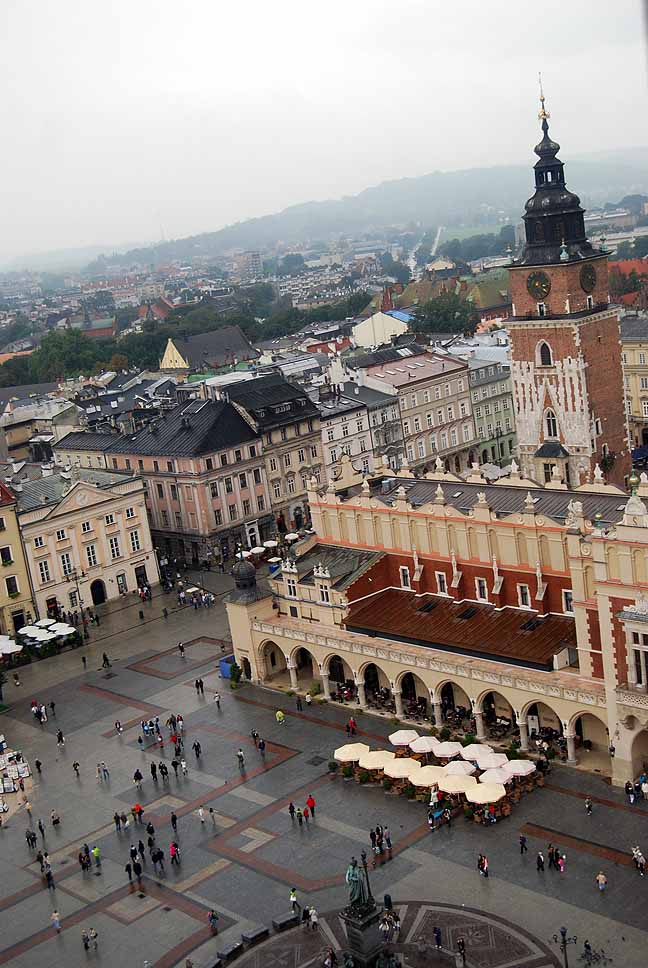
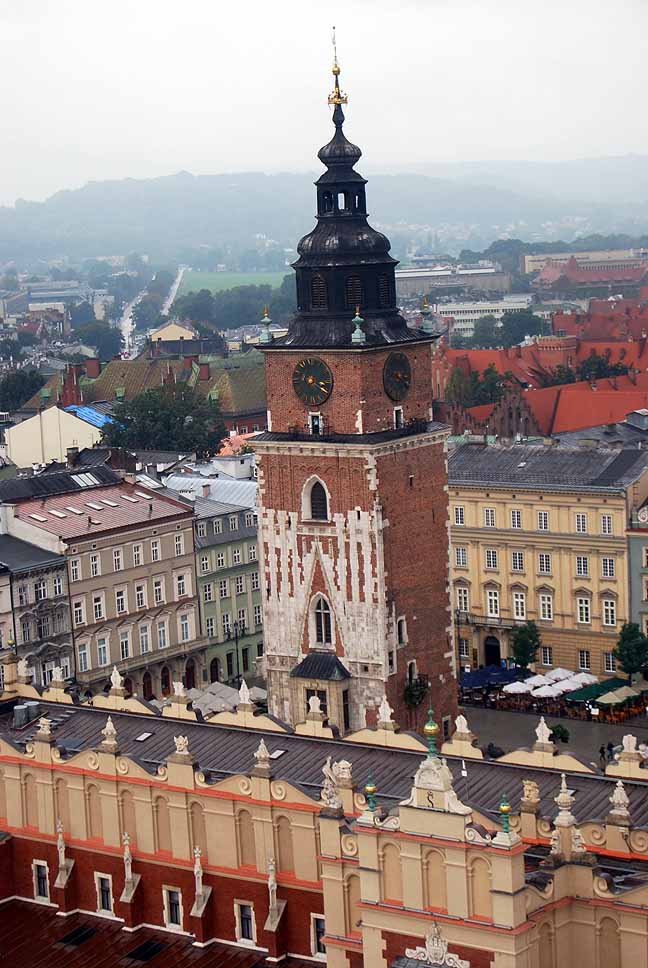
In 201o I climbed the 239 steps to the tops of the tower, and I took some pictures of Kraków from the top. I also watched as the trumpeter played the Hejnał, once in each direction, always ending abruptly. You can hear the Hejnał played here. By the way, besides being played every hour from the church’s tower in the square, the Hejnał is played every day at noon on Polish National Radio 1 Station.
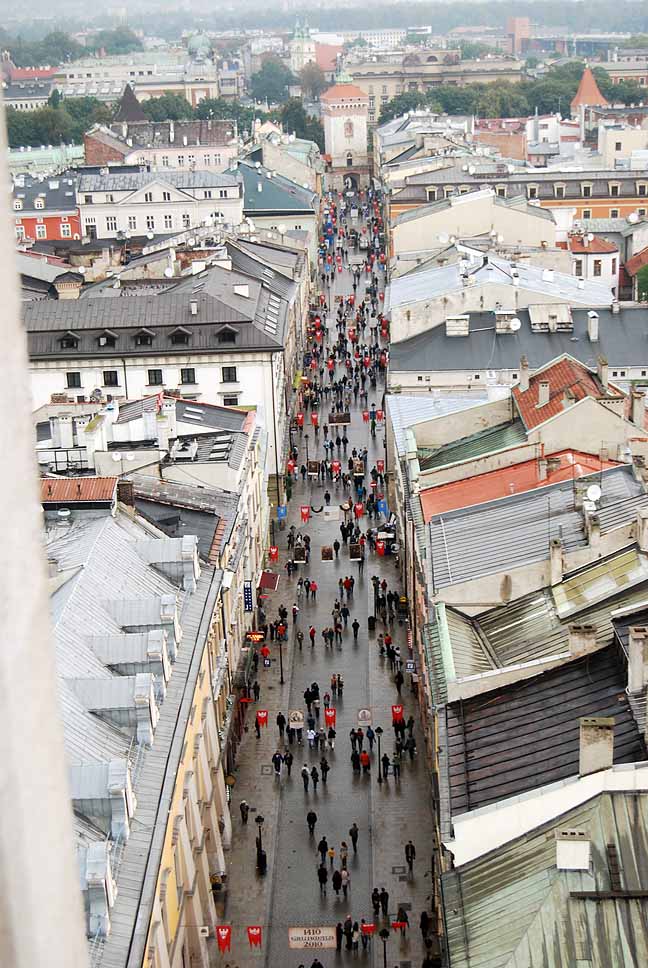
Ulica Foriańska
One other thing about climbing to the top of Kosćioł Mariacki. Poland is not the heavily litigious society the United States is. What do I mean by that? I think that lawsuits in Poland are not as prevalent as they are in the USA. Here in the USA, lawsuits result in businesses, attractions, building, and parks having many guardrails, warnings, and restrictions. Not so much so in Poland. And they do not have the ADA (Americans with Disabilities Act) like the and many lawyers trying to get rich on it, like in the USA. So the climb to the top of St. Mary’s Church is not that easy. There are no ramps. There are not a lot of handrails, the steps are uneven, and you must watch your step. But oh, the view is so worth it. If you ever have the chance to climb to the top, do it, you will not regret it.
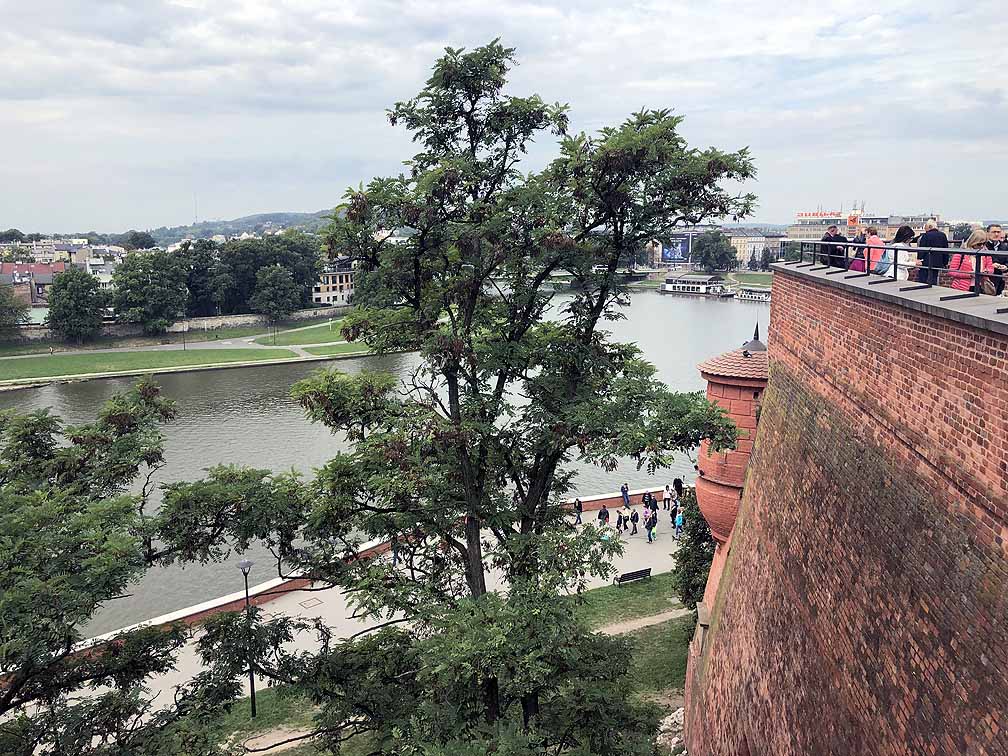
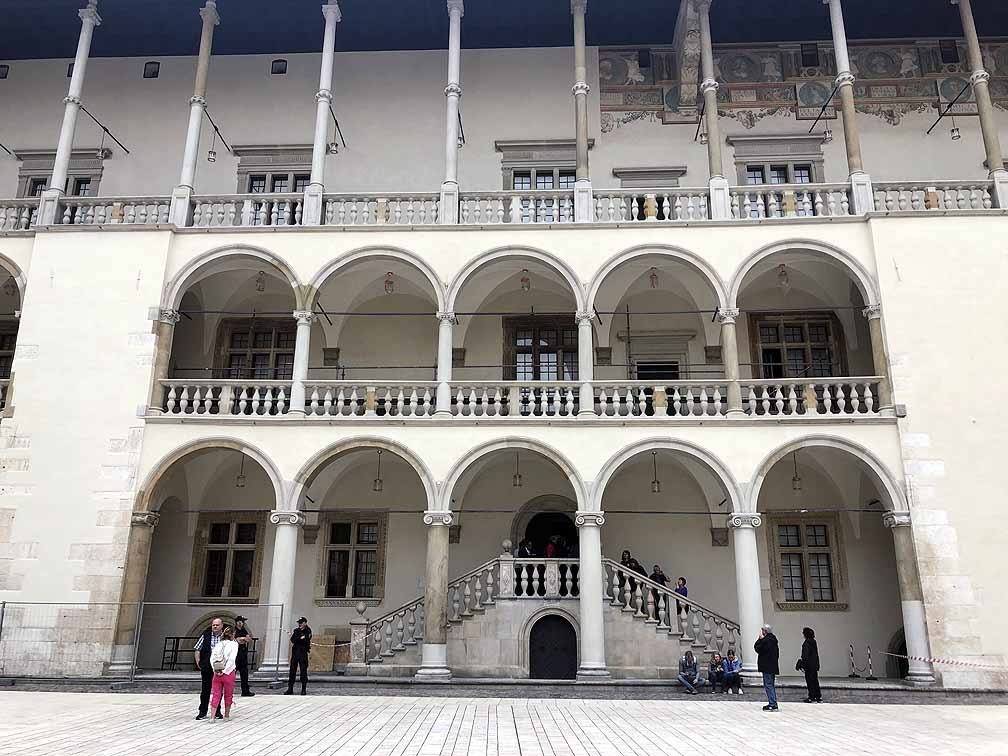
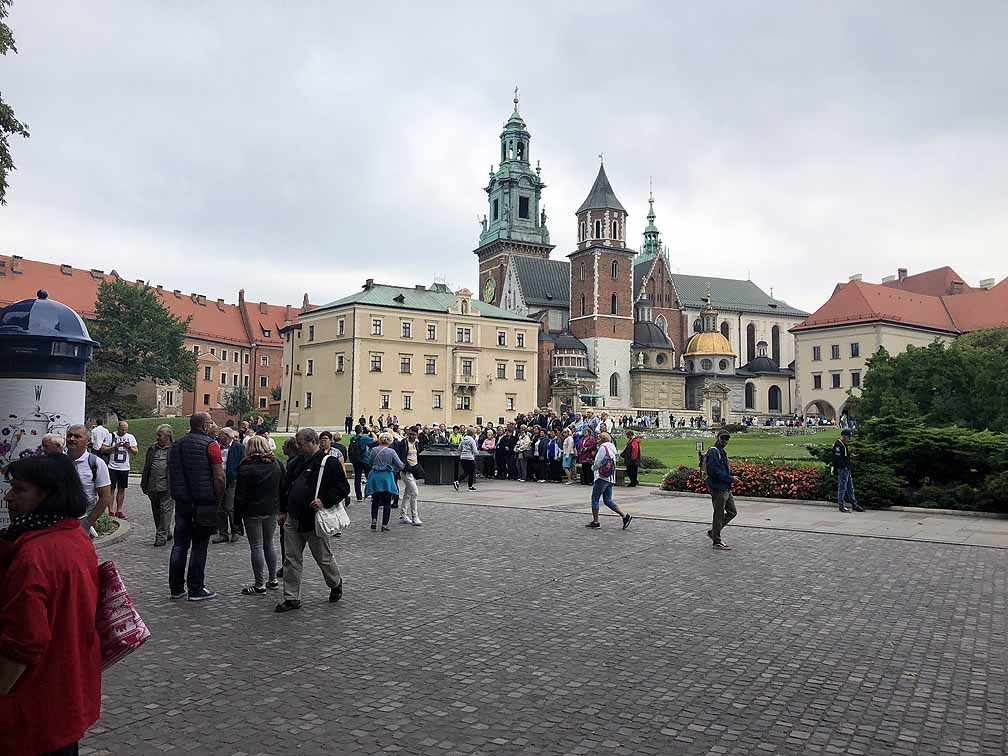
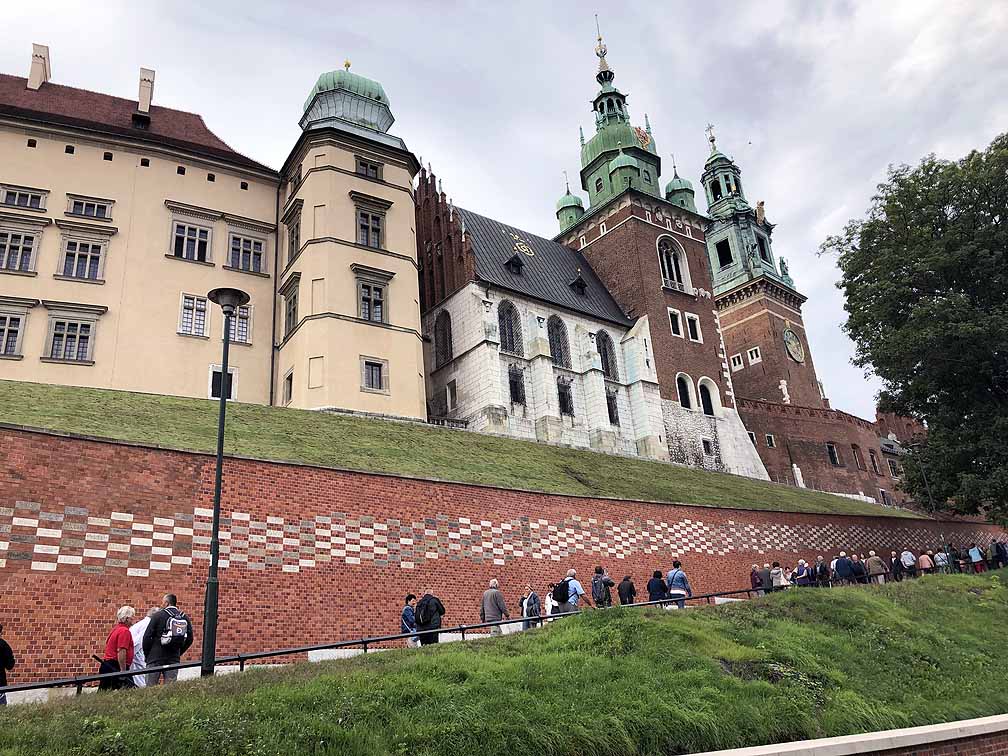
While the Town Square, the Church, and all the things associated with old town are the heart of society in Kraków’s old town, the Palace and Castle called Wawel marks its majesty. Wawel was built on a hill which overlooks the Wisła River (Vistula in English), and long ago, rivers were the main highways by which trade and merchandise moved about. Having control of the waterways was paramount, and Wawel had a commanding view and it was indeed quite the fortress.
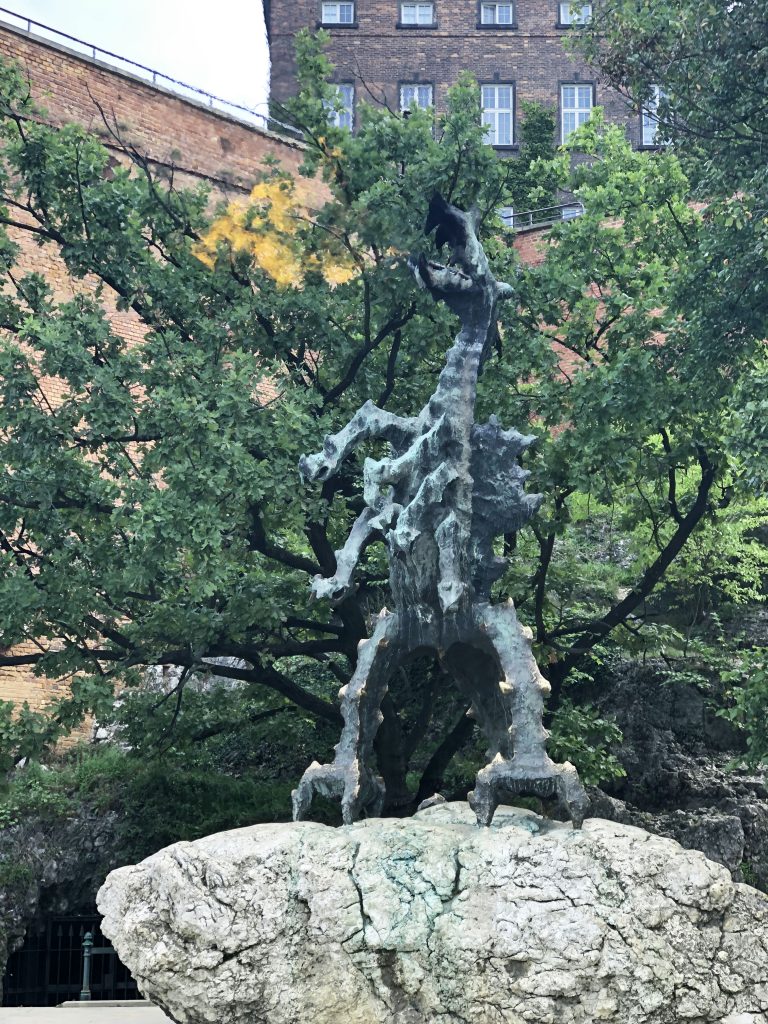
But how did Wawel Castle and Kraków come to be? That’s where a visit to the limestone caves at the foot of the castle tells the story. It was here that the legendary beast, Smok Wawelski, a fire-breathing dragon, lived. The dragon terrorized the community eating their sheep and local young maidens. One day, a legendary Polish Prince, Krakus, slew the dragon and saved the people. He founded the city of Kraków (apparently naming it after himself) and built his palace on top of the dragon’s lair (apparently naming it after the dragon). I saw the statue of Smok the Dragon when I was there, and sure enough, he was fire-breathing….
Smok Wawelski
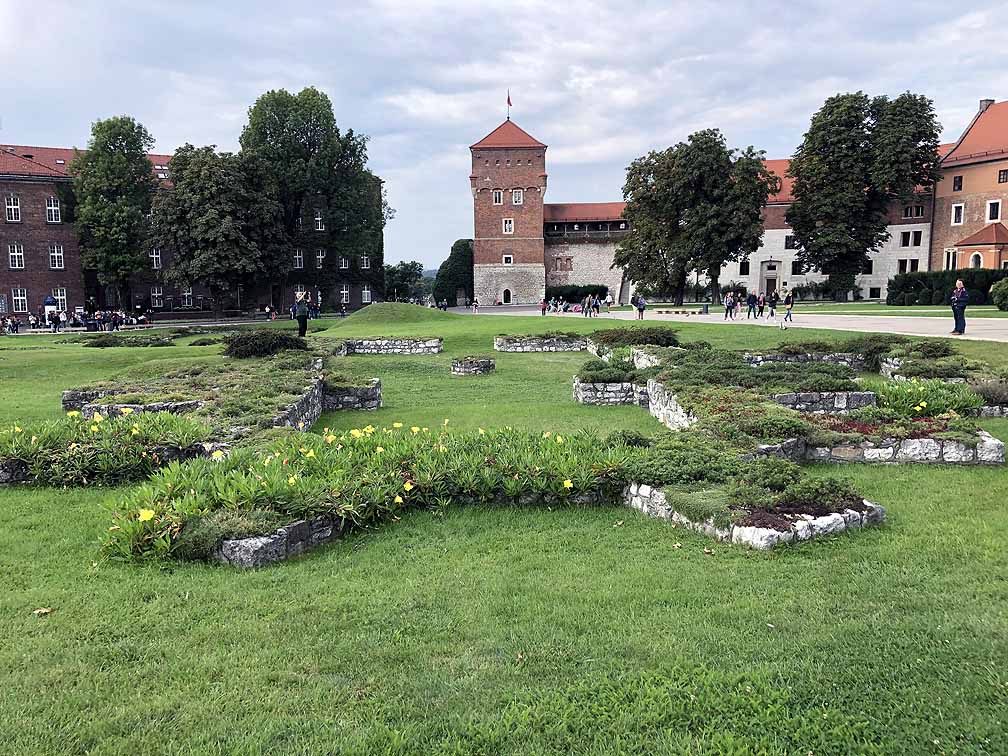
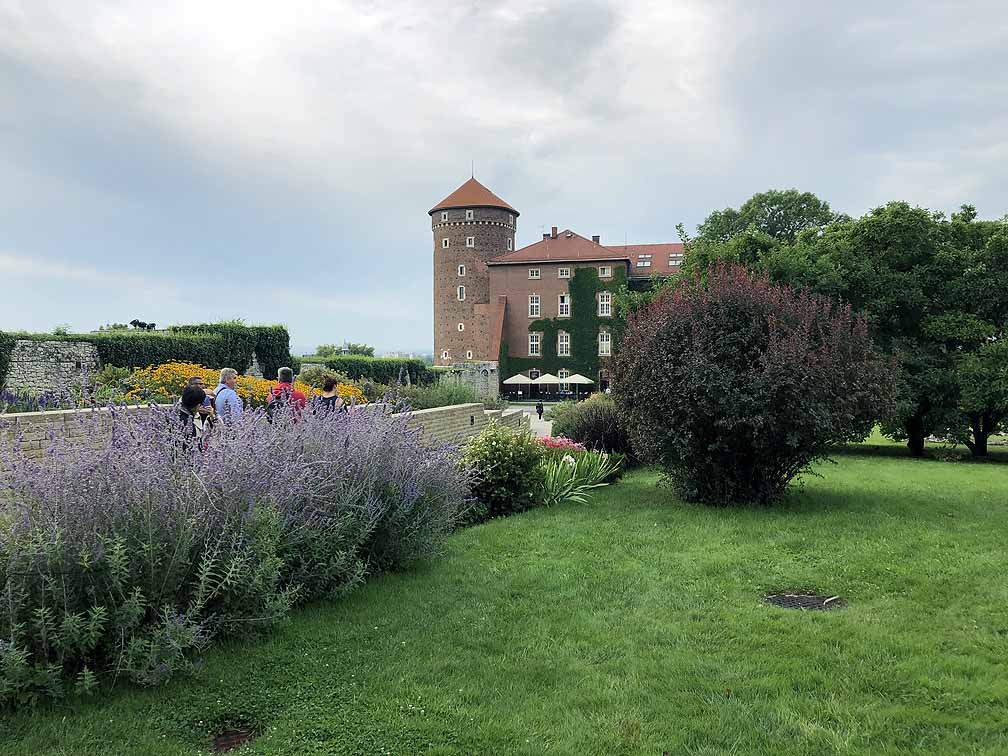
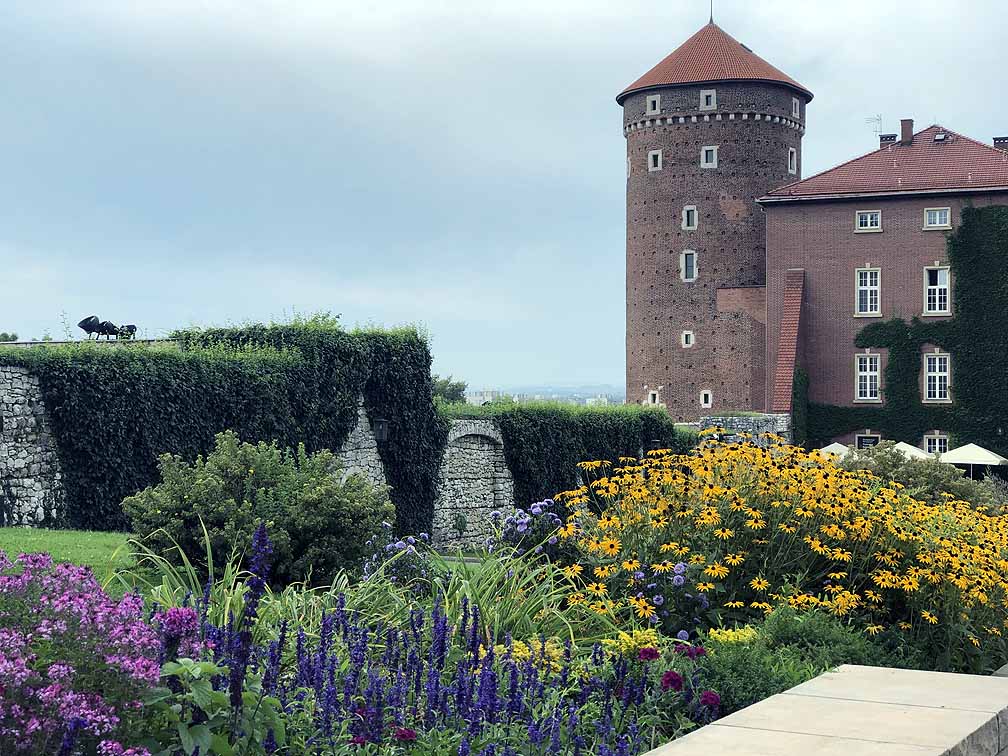
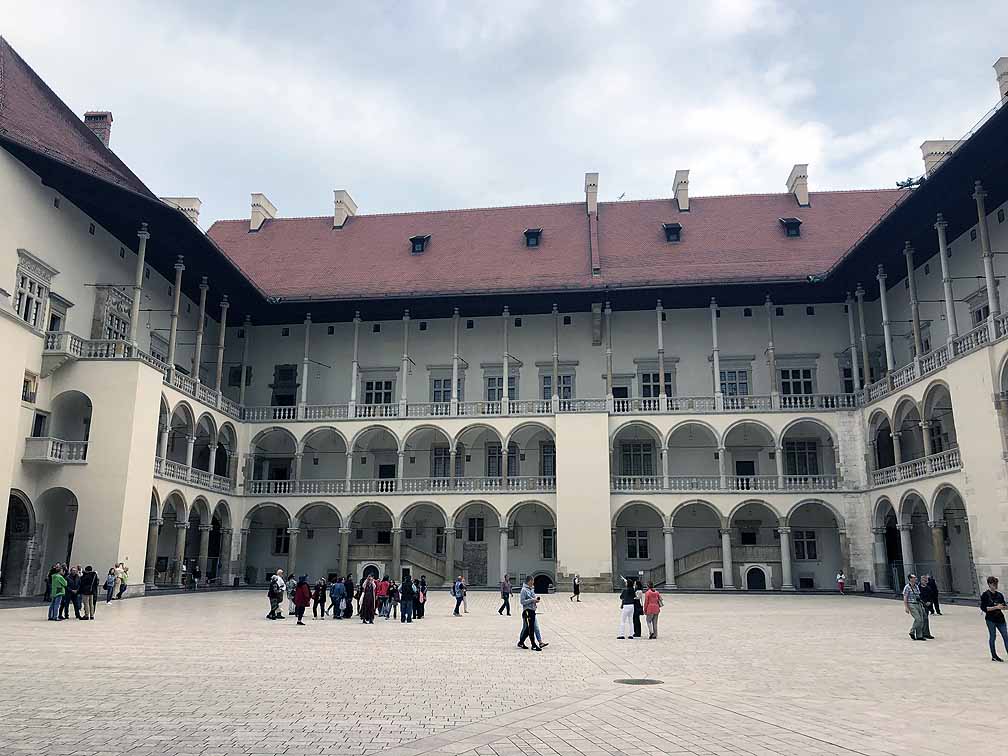
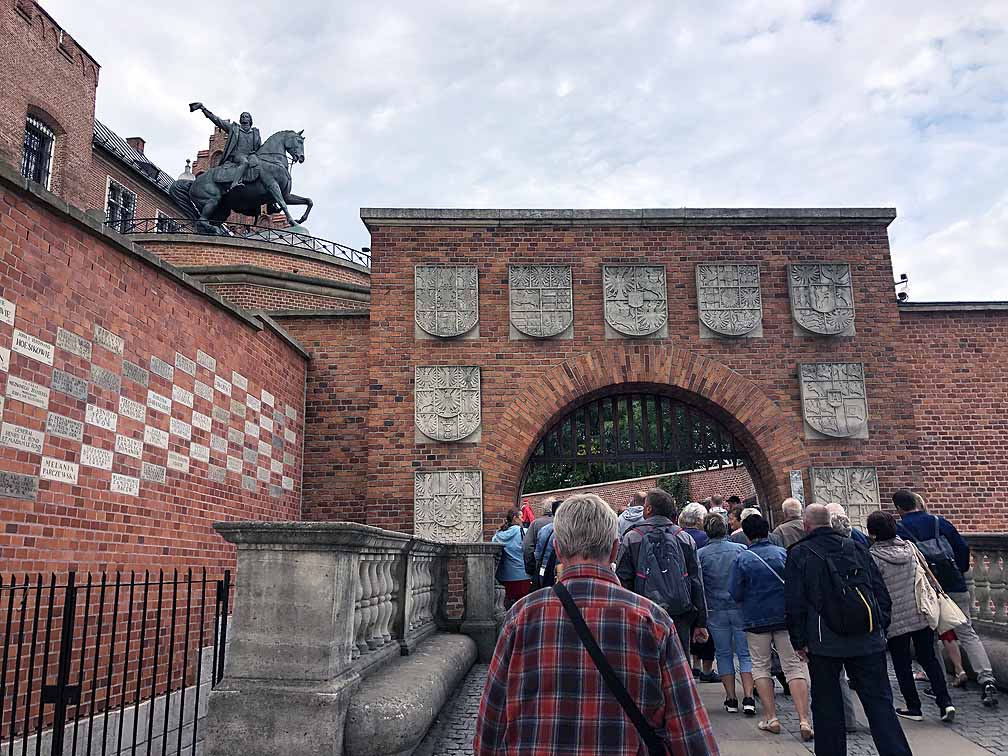
On my first visit to Wawel in 2010, I was on a tour. The advantage of a tour was that we had a guide to take us around and show us the highlights. But the downside to a tour is that you have to keep moving at the group’s pace and you only see the highlights. On my second visit in 2019, we were on our own and could take our time, enjoying the sights of Wawel, the palace and other buildings, the fortifications, and the many chapels as well.
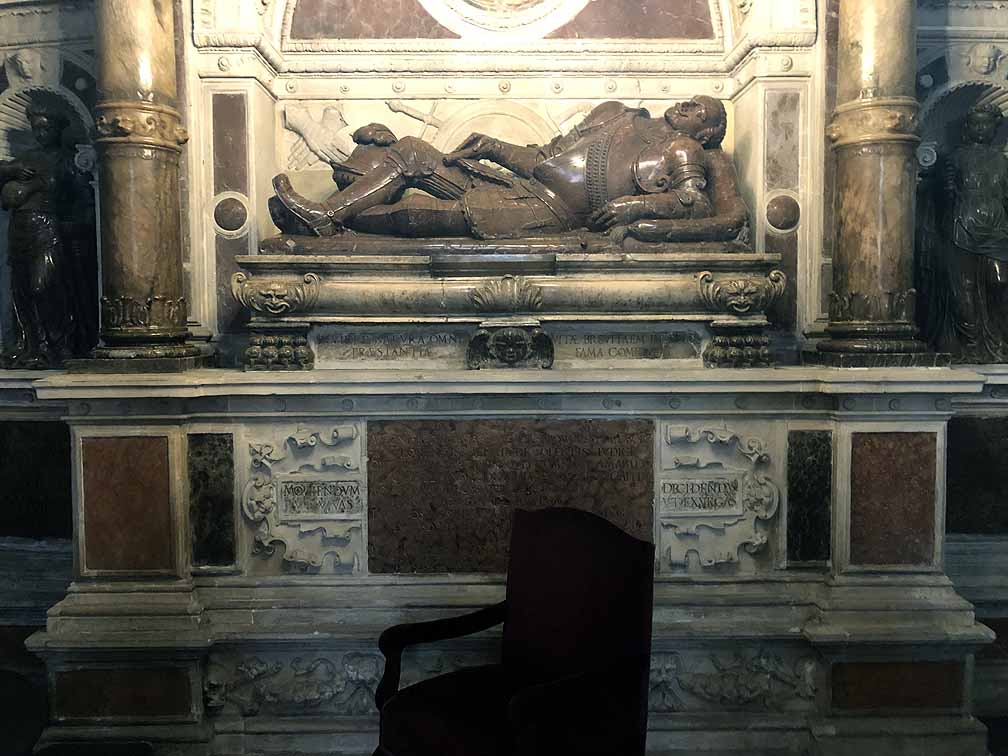
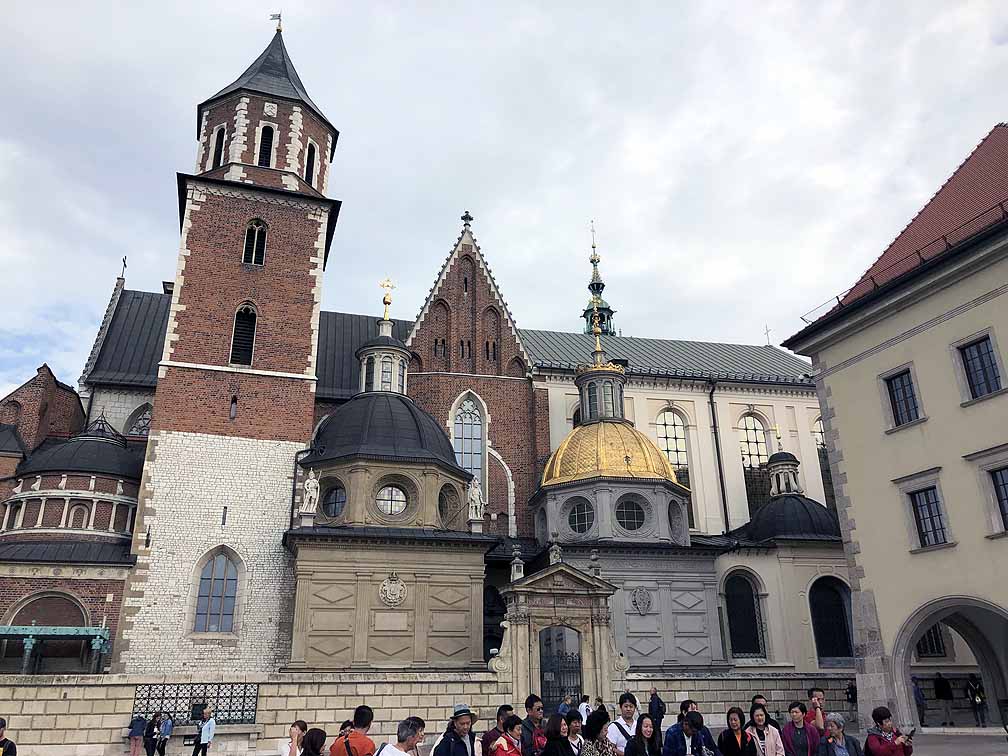
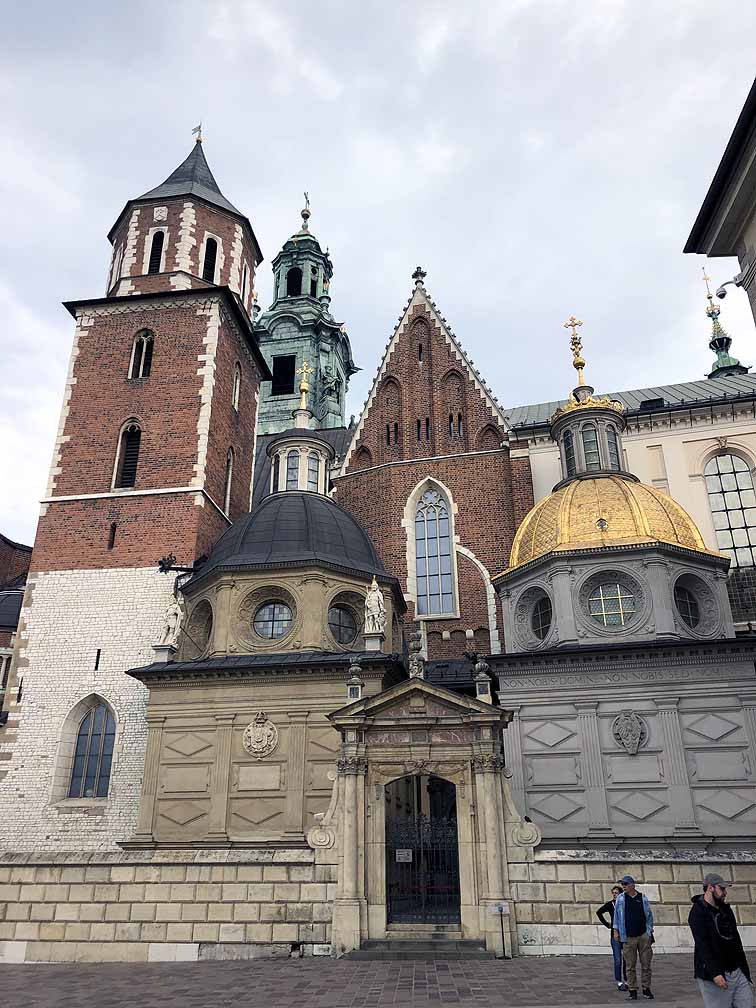
Wawel Castle is the very first UNESCO World Heritage Site, and deservedly so. It is part of a fortified architectural complex erection on a limestone outcrop on the left bank of the Wisła (Vistula) River. Some of its stone buildings date back to 970 AD. The Castle (or palace) at Wawel is a mix of many architectural styles, and is one of the largest castles in Poland. Kings have been crowned and buried at Wawel. The Wawel Cathedral is really an amalgamation of various additions and chapels, but the original first Cathedral still in existence was built about 1322 and the first king to be buried there was Władysław I the Elbow-High, in 1333. There are a number of stunning sarcophagi there, tombs, elaborately carved, and of many famous people. My favorite tomb is that of one of my heroes, King Jan III Sobieski, the King who saved Europe from the Ottomans in 1683 at the Battle of Vienna. Sigismund’s Chapel contains the tomb of Sigismund I the Old, and his son, Sigismund II Augustus, and is also quite magnificent. You can also see the sarcophagus of Queen Anna Jagiellon, whose story is in itself amazing. Poland’s first Queen (technically, she was a king, but a female king, the first in Europe, ) is also buried there, Jadwiga (Hedwig), crowned King in 1384. This history of Wawel is deep and rich, and you can read much more about it and see a gallery of amazing photos here.
Old Town of Kraków
Today, the old town of Kraków is surrounded by a lush, green, pedestrian walkway and many of the main streets and the square are pedestrians only. The above map shows the old town. Wawel Castle is located at the south end and sits high up overlooking the Wisła (Vistula) river. The Cloth Hall (Sukiennice) and Koscioł Mariacki sit on the town square in the center of the old city.
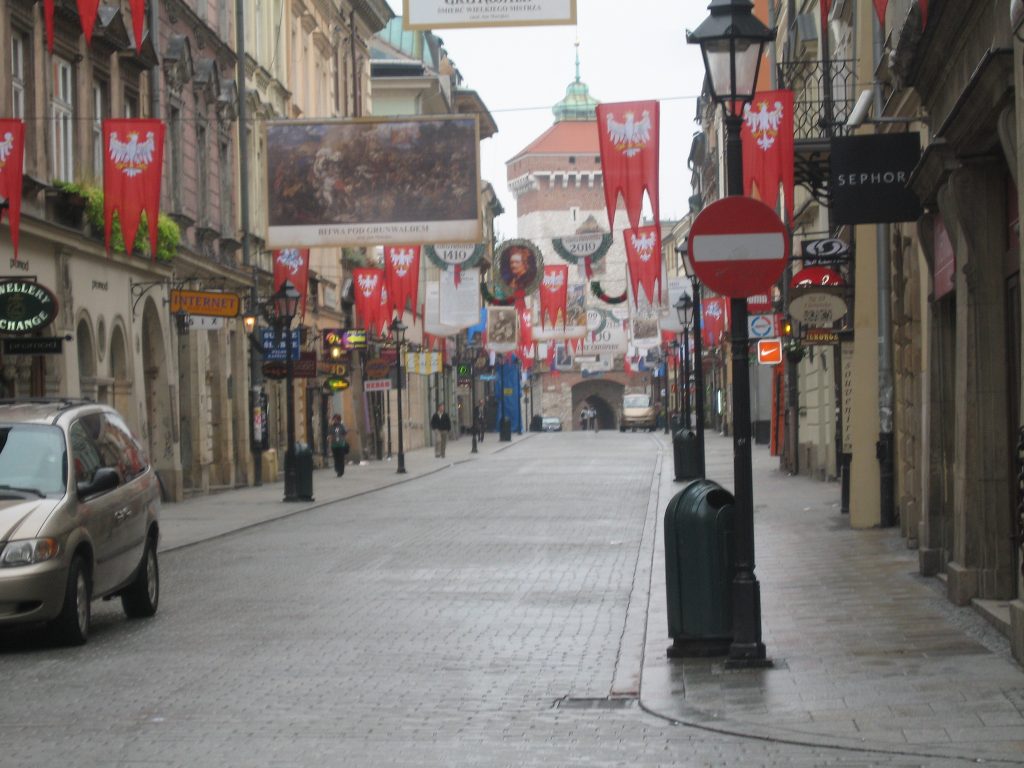
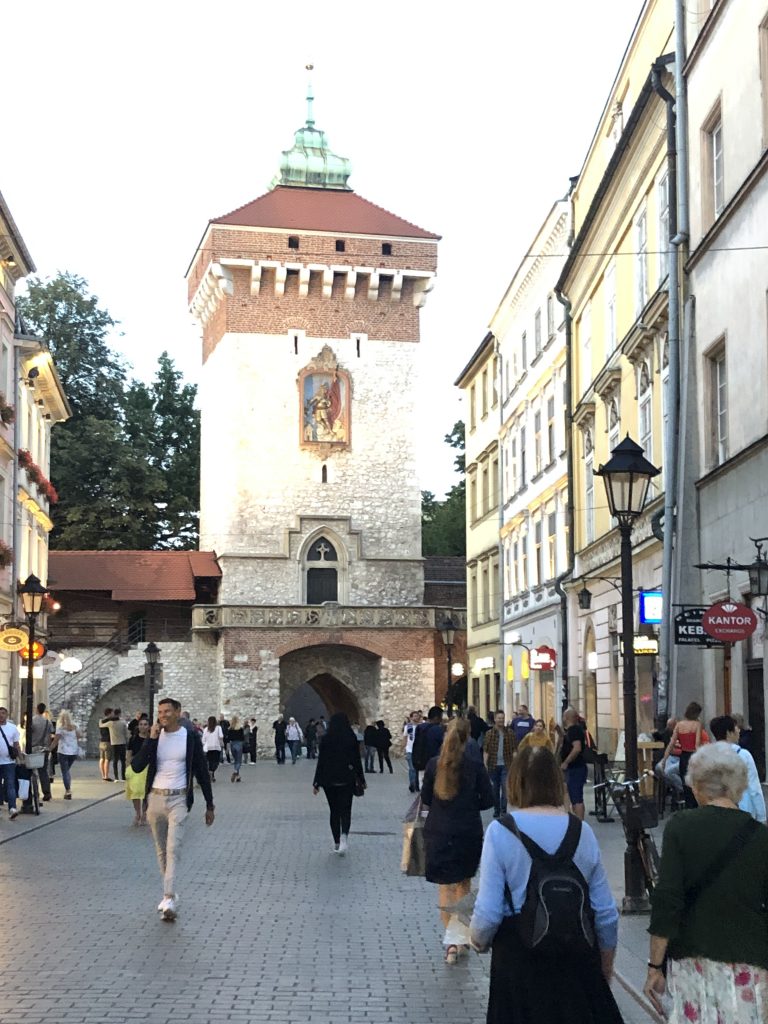
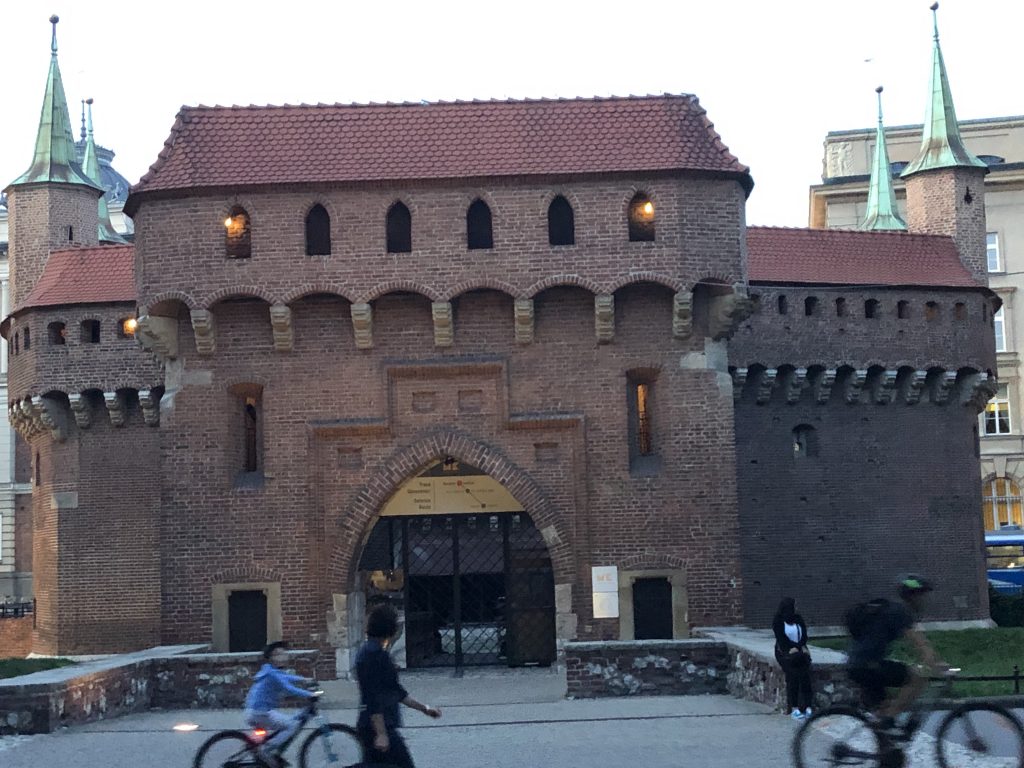
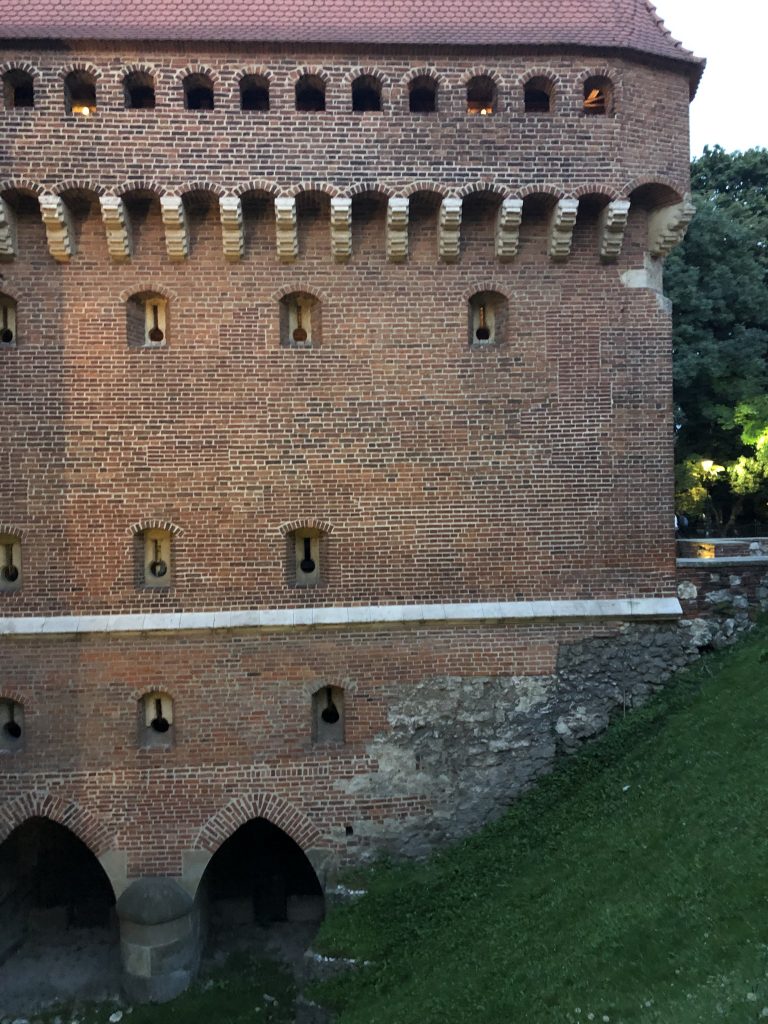
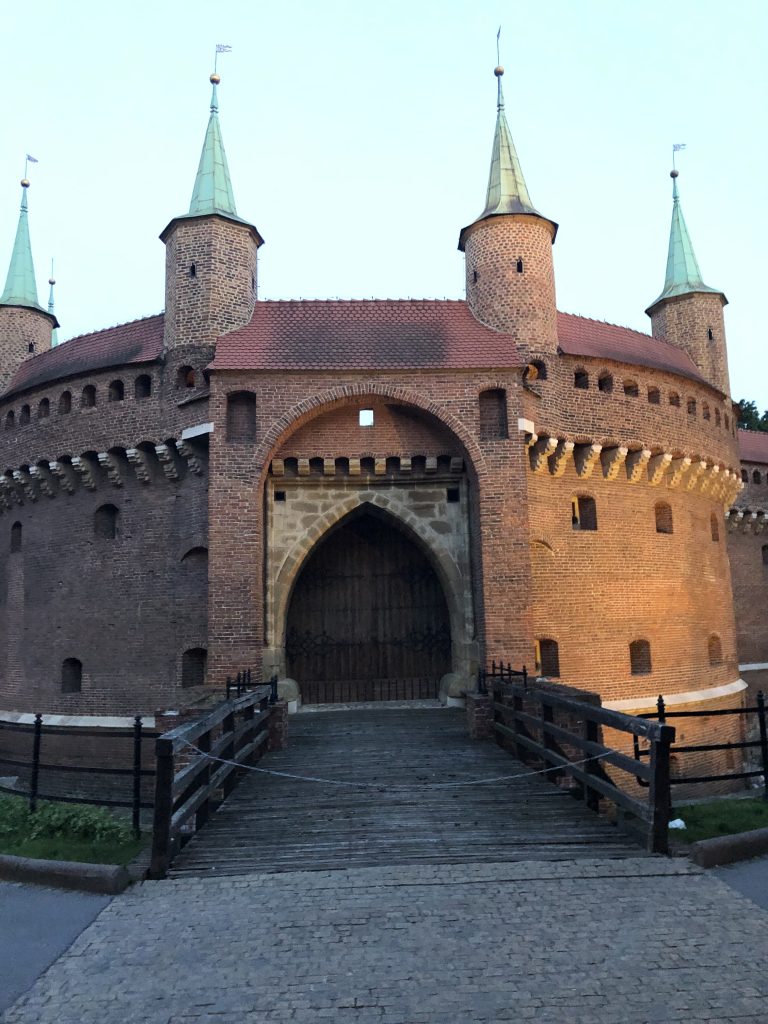
The red line is generally called the Royal Way, as it was the road taken by Kings and other royalty. The first part follows Ulica Grodzka (Grodzka Street), and passes a number of magnificent churches, many of which I’ve visited. On the north side of the square, the Royal Way follows Ulica Foriańska (Florian Street). This is at night a very popular place, full of clubs and bars, and a center of nightlife in Kraków’s old town. Following the red line (the Royal Way) all the way to the top (north), you’ll come to the limits of what was the old walled city, St. Florian’s Gate and the Barbakan, the old fortified entrance.
Ulica Foriańska. Photo taken in 2010, early in the morning. The night before this street was packed with people.
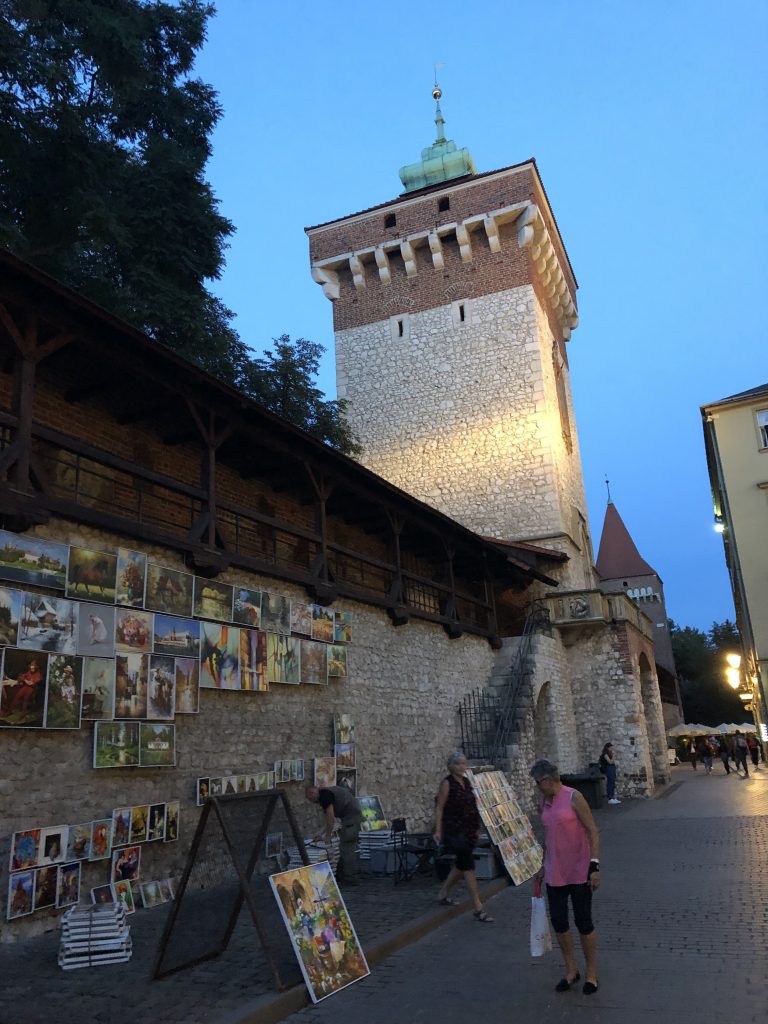
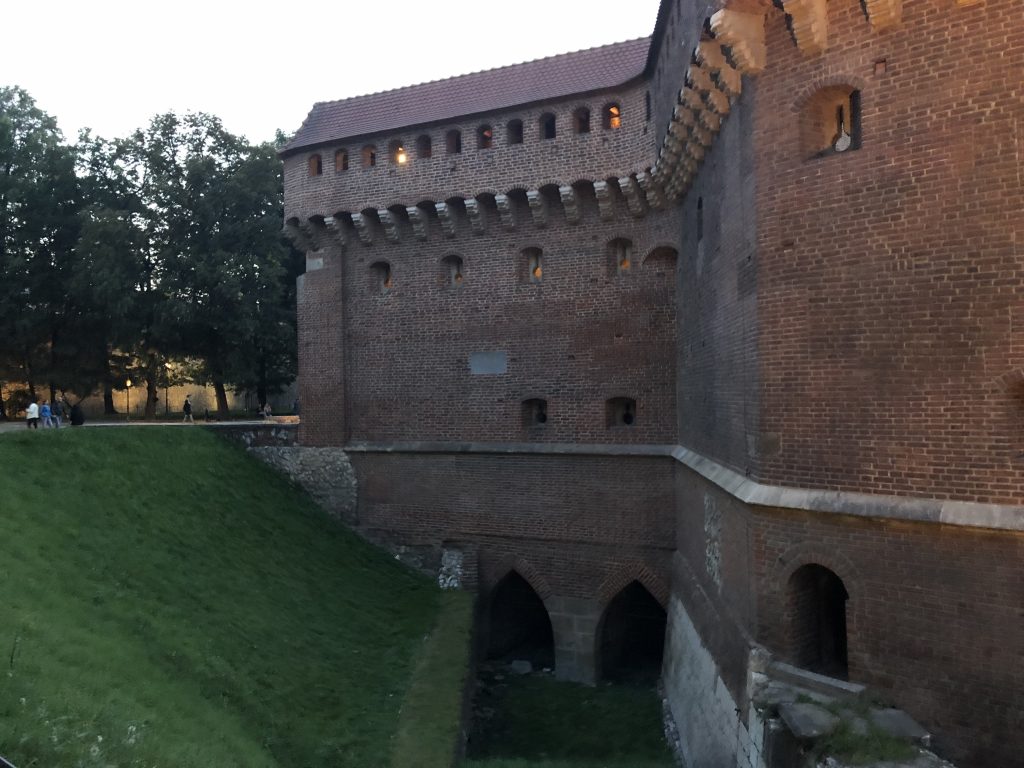
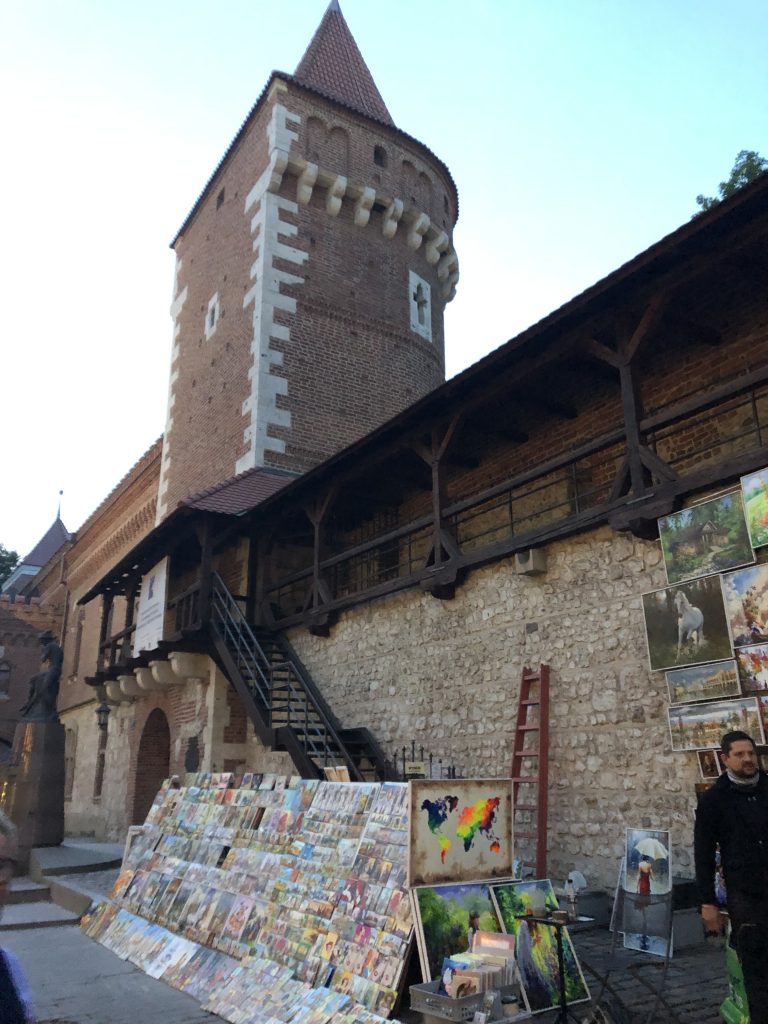
In olden days, the green walkway around the city was actually a moat, and the whole city was walled in. The main entrance/exit of the walled city was through the Barbakan. You can see the Barbakan, St. Florian’s Gate, and some of the remnants of the old wall in the photos below. And you can see how enterprising artists are using it to sell their wares, too.
There are many, many other things to see and do in Kraków and in the vicinity. The Old Town is just a small part of it, but is historically significant. You can read more about the Old Town here, and I heartily recommend it.
I have been in love with Kraków since my first time there. I follow a number of Facebook pages and Twitter accounts, and to some extent, I live in Kraków each and every day. Yes, for sure, my heart is in Poland, and the center of Poland, for me, is Kraków.
Today is the birthday of Polish hero of the American Revolution, Tadeusz Kościuszko, born on 04 February 1746. We all know the part he played in the American Revolutionary War, and he oversaw the construction of state-of-the-art fortifications, including West Point. After the war and his return to Poland, he fought for freedom there as well. After his part in the uprising against the Russians, his arrest, and his eventual release from a Russian prison, he came back to the US for a number of years and became very close friends with Thomas Jefferson. He eventually returned to Europe and lived in Switzerland until his death in 1817.
So what does this have to do with slavery in America? Well, Kościuszko made a hunk of money for his service as a general in the Revolutionary war. In his will, he stated his wishes that his US assets–which were considerable–should be used to buy the freedom of black slaves, including Jefferson’s own, and to educate them for independent life and work. Yes, Jefferson owned slaves, and Kościuszko wanted to see them liberated and educated. However, it did not come to be. Jefferson never carried out the wishes of Kośiuszko’s will.
It’s interesting to note as well that before his death, Kościuszko emancipated the peasants on his remaining land holdings in the former Polish lands, now in Russia, but Tsar Alexander did not allow it.
Tadeusz Kościuszko was a true champion of liberty and showed it by his actions. He fought to free the oppresses, both in America and in Poland, and was a great humanitarian. Thomas Jefferson wrote that “He is as pure a son of liberty as I have ever known.” A great tribute to a great man. And it’s fitting that now, during Black History month, you know the rest of the story.
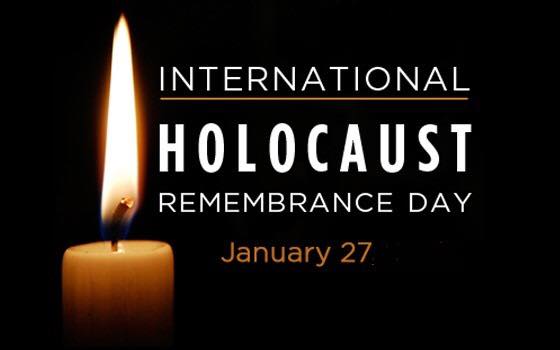
75 years ago today, the Red Army “liberated” Auschwitz and filmed and documented the horrors they uncovered at that Nazi concentration camp. Today, January 27, 2020, the world remembers the Holocaust in hopes that it will not happen again, and to honor the memory of those who perished, not only in Auschwitz, but the millions murdered by the Nazis during World War II.
I was fortunate to visit Auschwitz this past September, and it was certainly a memorable experience to tread on that sacred ground where near 1 million Jews were murdered, along with over 100,000 others. I wrote a bit about that visit in my blog here and also posted some photos on my web site here. All told, it’s estimated that about 6,000,000, or two-thirds of the European Jewish population were murdered.
Never forget. Those who don’t remember history are destined to repeat it.
And, if you have teh stomach for it, I recommend you view this YouTube video, a PBS Frontline hour-long episode that originally aired on May 7, 1985: https://www.youtube.com/watch?v=xy_xWKJubuY. Warning, it may be disturbing. But it is history, never forget.
I’ve decided to spill the beans and post my updated Top Secret Turkey Dressing Recipe.** I guess since I’m Polish, this makes it a Polish Turkey Dressing Recipe. The key secret ingredient is quiet Polish: Vegeta!
There is no right or wrong to this recipe. The key is to TASTE it as you go along:
Fry 1 pound pork sausage until browned. Drain on paper towels and allow to cool. When cool, process in food processor until fine. I like to use Jimmy Dean Sage Sausage. Set aside.
In a large saucepan, melt 1/2 cup butter (butter lovers can double this amount if they wish)
Slice and dice 2 or three large yellow onions. Add to melted butter and fry over medium heat for a few minutes.
Slice 3 or 4 stalks celery. Add to onion/butter mixture.
Add 12 oz. of fresh sliced mushrooms (you can use canned if if desired…but why?).
Continue to saute several more minutes until onions are transparent and celery softens a bit and mushrooms have lost their moisture.
Add a teaspoon or two of Vegeta (or salt if you don’t have Vegeta).
Add a nice sized bunch of fresh Sage, julienned (or about a teaspoon of dried sage).
Add about a half teaspoon of poultry seasoning.
Add fresh ground black pepper to taste.
Add about 1/8 to 1/4 teaspoon cayenne pepper–just a touch to give it some interest.
Stir well. Taste. Add seasoning as needed.
Put this mixture in a LARGE bowl.
Add sausage mixture to the above sauteed veggies.
Stir the mixture and check for seasoning. It should be a little on the “not salty” side, as the chicken broth may add a lot of salt, too.
Add about a pound of stale bread crumbs (I used to make my own bread, but now buy a loaf of Pepperidge Farm Hearty white bread. Cube it and dry it about 1/2 hour in a 250-degree oven). If you buy seasoned bread crumbs, you may have to adjust the seasoning, but I consider this cheating.
Gently mix the mixture in a large (large, large, large) bowl. Luckily, I have a humongous bowl that my sister, Mary, gave me years ago.
The mixture will be quite dry yet.
If desired, you can add other accouterments, but be careful to not add too many. For example, maybe leave out the mushrooms and add one or more of the following:
dried cranberries
raisins
pecans
hazelnuts
walnuts
shredded carrots
apples
mushrooms (ok, you can add them back in if you wish)
be imaginative…..
When mixed, it’s time to add some liquid:
beat one or two eggs and add. Mix well.
If desired, you can add a cup of milk or half and half to add some richness, but this is optional.
Add about a quart of chicken broth. I generally make my own chicken or turkey broth and prefer to use that. You can also use chicken base to make your own broth. Be careful of canned chicken broth–it can be very salty. Best is to make your own ahead of time.
Add liquid until the mixture becomes rather gooey.
Turn into a greased 3 or 4 quart baking pan.
Cover or cover loosely with foil, and bake until hot.
You can bake this in any temperature oven, since all the ingredients except the egg are already cooked, all you need to do is heat it and get it to set a bit. I’d recommend about 350 degrees for 45 minutes should be just about right. If you want a bit of the crust, cook it uncovered the last 15 or 20 minutes.
That’s it. Pretty simple, huh? All it takes is some time and a bit of imagination. Serve as an accompaniment to Turkey or Chicken, or as a substitute for mashed potatoes….or…. hell…. it even makes a great meal by itself (though a wee bit of gravy over the top sure is nice, too). This recipe does not last long in our house. Hope you enjoy!
*This recipe is based on Mom Konieczny’s Turkey Dressing: she deserves the credit, she taught me how to cook, and to love to cook!
I love pierogi. I love to eat them, love to make them, and nearly always have several dozen on hand–just for emergencies.
First, my “credentials.” I started life as a pierogi-eater. They were always a special treat, and we had them every year for Christmas eve. I recall one year when I was young and my brother and I had a pierogi-eating contest. I’m not sure who won, but I believe I ate 14 of them! Well, I was a growing teenager at the time.
Later, when I was on my own, I tried my hand at making them, using my mother’s hand-written recipe, passed down from her mother and her mother’s mother, who brought it from the “old country.” Over the years, I’ve refined the recipe and the technique. I’d say that I’ve made thousand of pierogi over the last 50 or so years since I left home.
Early on, I’d make them and then eat them. Later, I started to gather with friends, and we’d make and eat them together. And they we started making more and more–one year a group of us made well over 400 pierogi. And that brought up the question of storage. At first, we’d boil them all, fry and eat what we could, and then freeze the remainder. But over the years, I started making them myself, just because I like to make them. And then I’d freeze them. At first I always froze them individually, uncooked. Then when a need arose, I’d boil, then fry them.
Eventually I wondered about doing the opposite, making them, boiling them, then freezing them for use later. Each scenario has advantages and disadvantages. Now that you know my “pierogi credentials,” here’s my take on the two various methods and what my experience has taught me
Freeze now, then later boil, fry, and eat
In this scenario, which I tried first, I’d make the pierogi, then carefully line them up on sheet pans (on parchment paper), put them in the freezer, and freeze until solid (at least one day). Once frozen, I place in a single layer in a vacuum sealer bag, then seal, but not so air-tight that I crowd them. The advantage here is that once frozen, they are pretty solid. They freeze well in a single layer and can be stored that way in the freezer. When the need arises, there is no need to thaw, you simply plunk them in boiling, salted water, and cook until they float to the top–and then maybe one or two minutes longer. Drain, then fry in butter and you have these little heavenly pillows ready to serve and eat. The nice thing is, you don’t need to plan ahead, and you can simply take out and boil what you need. It works fine. One note: if you’re going to eat them sooner rather than later, you can skip vacuum sealing. But if you think you might keep them frozen more than a month, vacuum sealing is a must as it will prevent them from getting freezer burn.
Boil now, then cool and freeze for use later when you can thaw, fry, and eat
Lately, I’ve been using another method, and it has some advantages. I make the pieorgi, then boil them until cooked (when they float, give them another minute), then drain and chill in an ice bath. Once good and chilled, coat them with a bit of butter (or oil). Place on a parchment-lined sheet and freeze in a single layer until good and frozen (overnight at least). Once frozen, place in a single layer in a vacuum sealer bag and vacuum seal–but not too tightly, you don’t want to crack the delicate edges. (You could skip the vacuum seal if you plan to use within a month, and just place in a zip-lock bag, but to keep for longer, vacuum sealing is a must to avoid freezer burn).
This method requires a bit of advance planning. When planning to serve them, pull them out of the freezer and let them defrost at room temperature about 3 hours–they’ll still be plenty cold (for food safety) and may still be a bit frozen in the center. If they thaw too fast, just refrigerate. Then, just before serving, fry them gently in butter (I prefer to mix butter and olive oil, 50/50) and they are ready to serve. By the time they are browned, they’ll be heated through (remember, they’re already cooked) and ready to serve. Of course, you’ll need to cook all you’ve thawed, so freezing in smaller batches is advised. Though in my home, leftover pierogi magically disappear quite fast.
Conclusion
There is no “right” way to make pierogi in advance. You have to do what works best for you. In both methods, I recommend you freeze individually. Once frozen, you can place them in freezer bags or vacuum seal them. Which every way you choose, you can ensure you have an emergency stash of pierogi–I always have some on hand, just in cast. Smacznego!
Finally! Since we returned from Poland in mid-September, I’ve been going through all my photos and reliving our experience there. And now I am done. All my photos are posted on my web site below. There are a lot of them, plus some videos from the wedding, which was the highlight of our trip.
Over the next weeks and months, I plan to write individual posts here in my blog about the various places we went, things we saw, and things we did–it was a great adventure. But for now, you can get a sneak preview and browse my photos here:
I’ve tried to optimize the slides for mobile devices, as well. If you like what you see, feel free to leave me a comment here and feel free to share my photos on Facebook or your favorite social media site, but please give me credit. Thanks
On September 17, 1939, Poland’s fate and freedom were sealed. While Germany invaded on September 1st, it was the Soviet Invasion on the 17th that sealed Poland’s fate. Stalin and Hitler had one goal–to wipe Poland off the face of the earth forever. Never forget that.
Just a week before the war started, Hitler told his military commanders, “The object of the war is … physically to destroy the enemy. That is why I have prepared, for the moment only in the East, my ‘Death’s Head’ formations with orders to kill without pity or mercy all men, women, and children of Polish descent or language. Only in this way can we obtain the living space we need.”
Stalin had no less “lofty” goal. He approved the NKVD requested order to murder over 22,000 Polish intellectuals and military officers (Katyń Massacre) and the deportation of hundreds of thousands of Poles to Siberia. He, too, wished to wipe Poland off the face of the earth.
To this day, modern Russian history falsely portrays the Soviets as liberators of Poland in World War II. Nothing could be further from the truth! In fact, with the complicity of the allies, after the war Poland was handed over to the Soviets and the legitimate government of Poland no longer recognized. This situation lasted until 1989 when at last Lech Wałęsa and Solidarność, the influence of Pope John Paul II, that of President Ronald Regan, and others were able to bring about the demise of Communism–that fall of Soviet power began in Poland and quickly spread. But it all started in Poland.
But all of this began 80 years ago today, when a greedy Germany and the Soviet Union carved up Poland, and Poland’s allies did nothing to reach out a helping hand. Never forget.
Well, the wedding is over, and in a later post I’ll explain why we went to bed at 2:30, well before the party ended about 4 AM, and why I got up about 10 AM this morning. But once we got going, we headed up to a nice breakfast at the wedding venue, and saw a few of the folks we’d spent the evening with. Eventually, we headed into Gdańsk and easily found our hotel for the next two nights.
We used our afternoon wisely. We went to the museum of the Baltic and were truly amazed. The museum itself is a great review of Gdańsk’s maritime history, with lots of historic exhibits, models of ships throughout history, and many old artifacts. As a part of the exhibit, we for to tour a freight ship, built here in 1949.
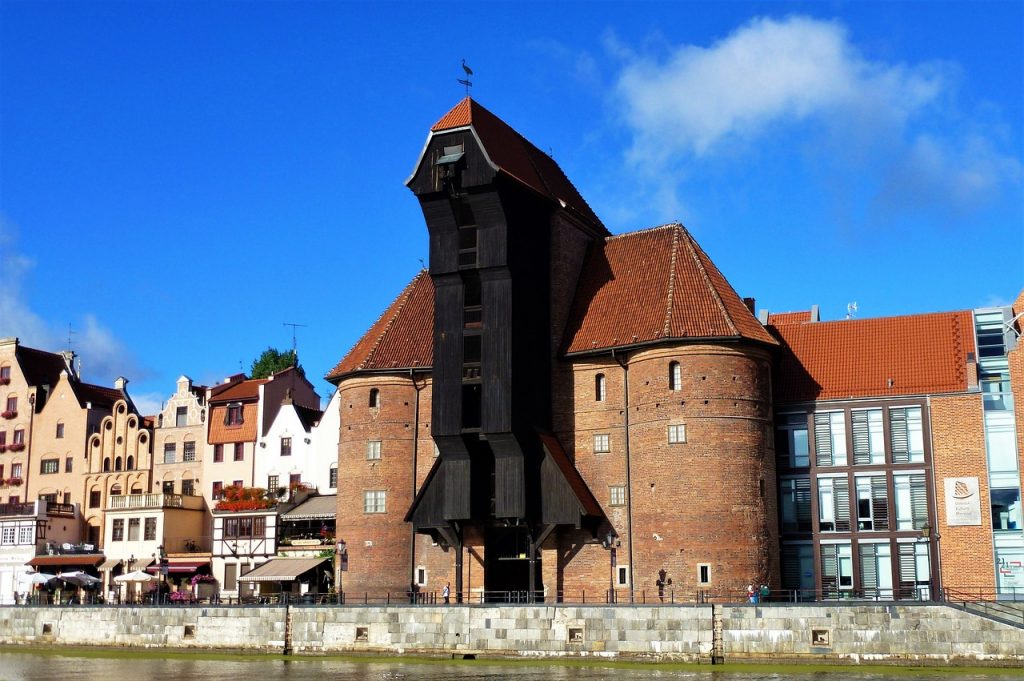
But then we took the water taxi across the Motława River, and had the opportunity to walk up into the iconic Gdańsk Crane. Wow, what a great experience. Originally built in the 1300’s, it was rebuilt in 1444, and is just amazing. If you want to learn more, check here: https://commons.m.wikimedia.org/wiki/Category:%C5%BBuraw_in_Gda%C5%84sk.
The iconic Gdańsk Crane, which we got to tour
Later, we went to Grabiny-Zameczek and had diner with Alicja and more family, but that’s a a post for another time.
Once back in Gdańsk, we walked around a while, hat some “happy hour” at a few places, enjoyed the fresh evening air and then called it a night.